
Many jewelry brands approach a manufacturer without a finished CAD file. They may have a saved reference image, a hand sketch, an existing piece, or simply a direction for a new collection.
That is enough to begin a conversation. The important part is what happens next.
A professional development process should gradually turn the visual idea into something a production team can actually follow:
Reference Image → Product Brief → Technical Review → CAD → Material and Stone Confirmation → Physical Sample → QC → Approval
For a buyer, the first sample should do more than show whether the jewelry looks attractive. It should answer a more useful question:
Is this a product worth developing further, and can the approved result become a repeatable production standard?
MOSUP supports custom jewelry development from reference images, sketches, physical samples and existing styles. Sample Orders have no minimum order quantity, so brands may begin with one sample or order several samples when they need to compare versions, prepare photography or test a new product direction.
1. A Reference Image Is a Starting Point, Not a Production Specification
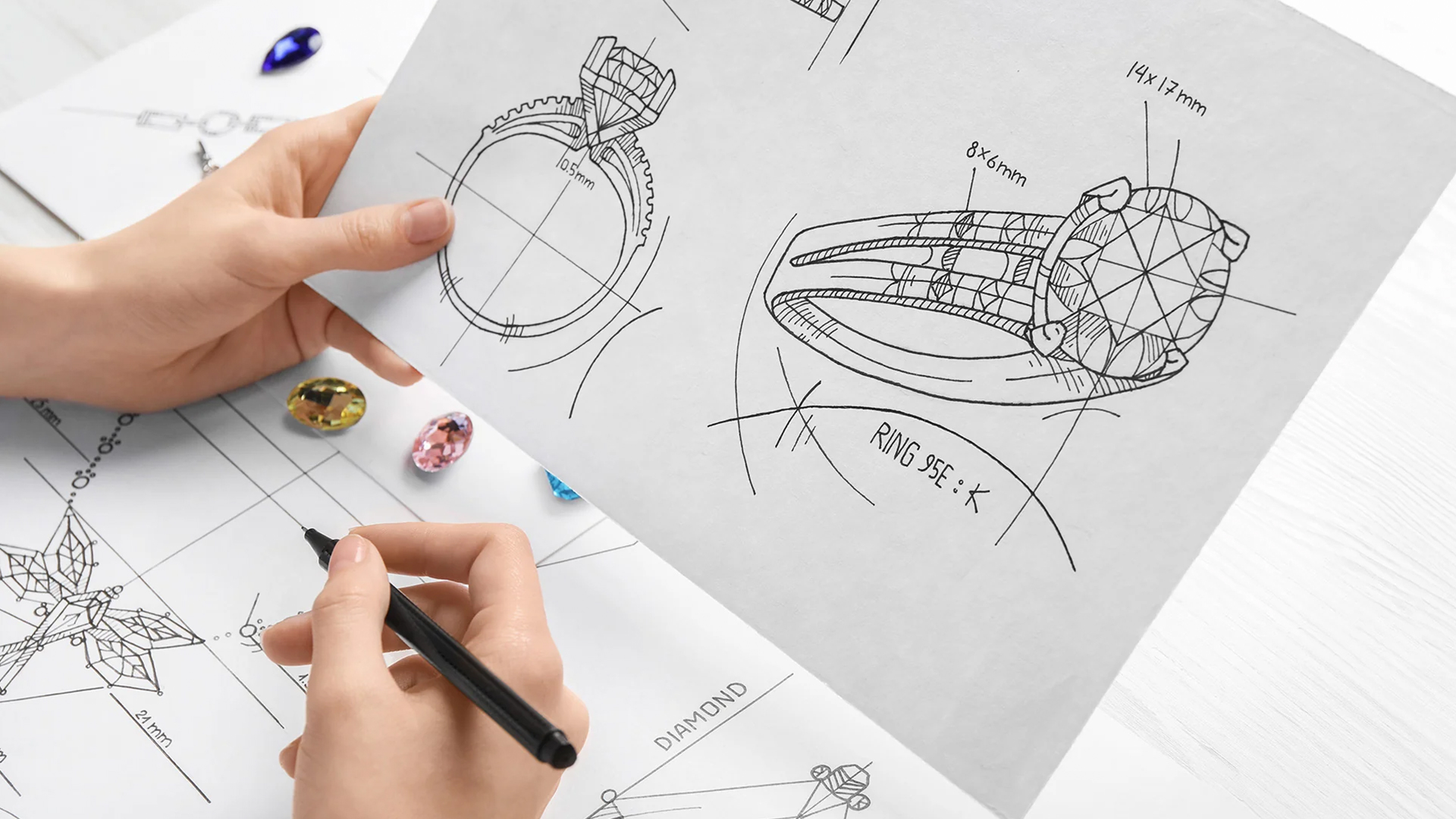
A reference image can communicate what you like. It rarely tells a manufacturer everything needed to make the jewelry. For example:
- How wide should the ring shank be?
- What are the actual stone dimensions?
- How high should the setting sit?
- Is the piece S925 sterling silver or 14K gold?
- What are the accent stones?
- Where should the brand mark go?
- What retail price position is the product being developed for?
That is why buyers should identify which elements of the reference are essential and which can be modified. The same ring concept, for example, might be developed as:
- S925 sterling silver with moissanite,
- 14K gold with moissanite,
- 18K gold with a lab-grown diamond,
- or a lab-grown colored gemstone version.
The overall visual direction may be similar, but the cost, construction, positioning and manufacturing requirements can be very different.
1.1 What Should a Buyer Provide in the First Inquiry?
At minimum, give the manufacturer: the product type, reference image, preferred metal, stone type, stone dimensions or desired visual size, sample quantity, target market, and intended product positioning.
You do not need to know every technical detail at the first contact. Part of a good development process is identifying which specifications still need to be decided.
2. Check Manufacturability Before Reproducing the Look
“Make something like this” sounds simple. In jewelry manufacturing, the visual appearance is only one part of the problem. A design can look attractive from the front and still create production or wearability problems.
Before CAD development, the structure may need to be reviewed for: prong support, stone-to-setting proportions, shank thickness, pendant connection points, earring weight, clasp function, casting feasibility, stone-setting access, and finishing requirements.
This is where manufacturing experience becomes useful. The objective is not simply to reproduce an image. It is to turn the idea into a product that can be made, worn and potentially reproduced later.
2.1 Reference Images and Design Rights
Reference images can be useful for communicating style, construction or market direction. However, buyers should make sure they have the right to use the design materials they provide.
When a reference belongs to another brand, a better long-term approach is usually to identify the elements you like and develop a differentiated product rather than request an unauthorized one-to-one copy.
That also gives the finished collection a stronger reason to belong to your brand.
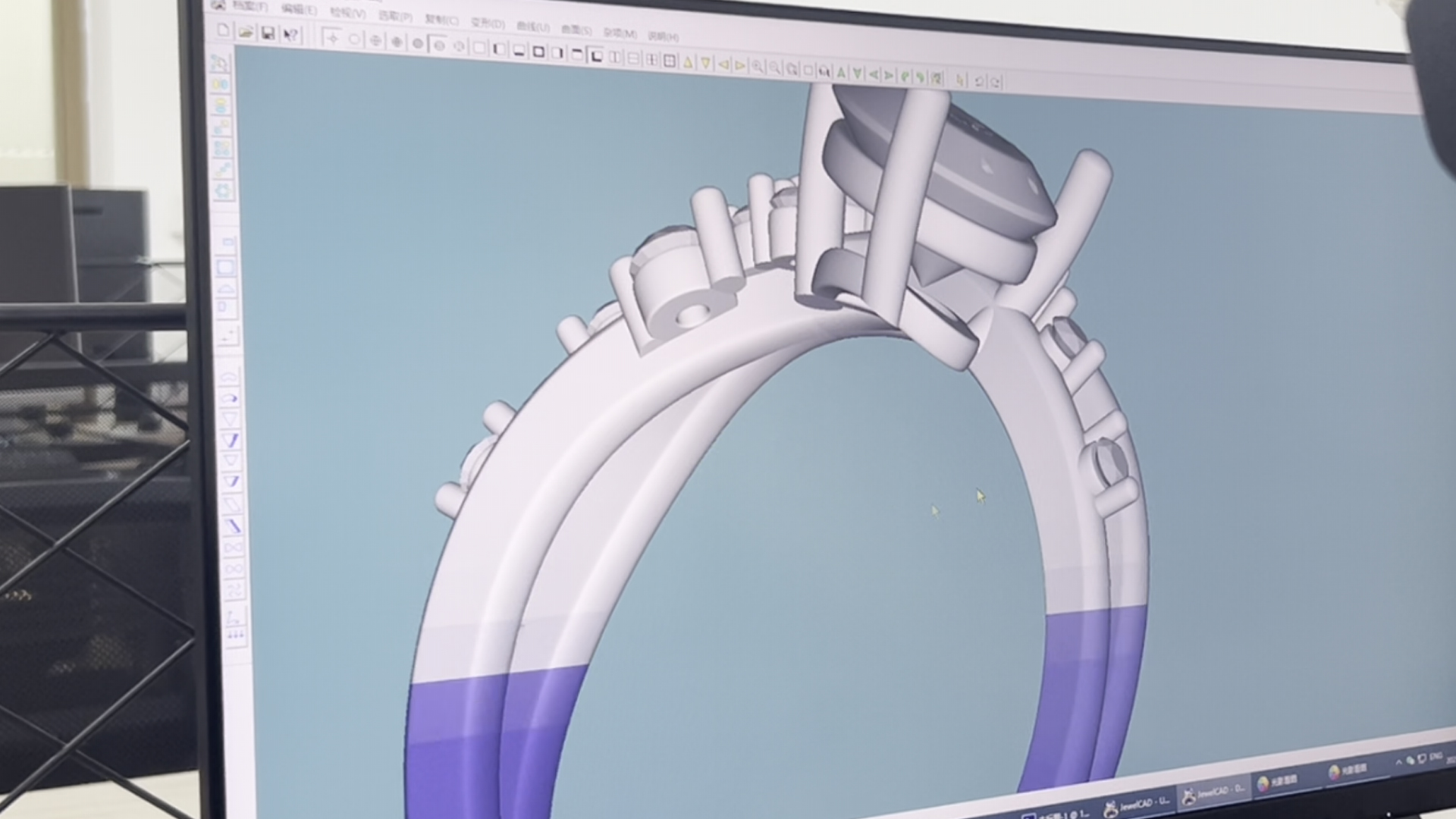
3. CAD Is More Than a Good-Looking Rendering
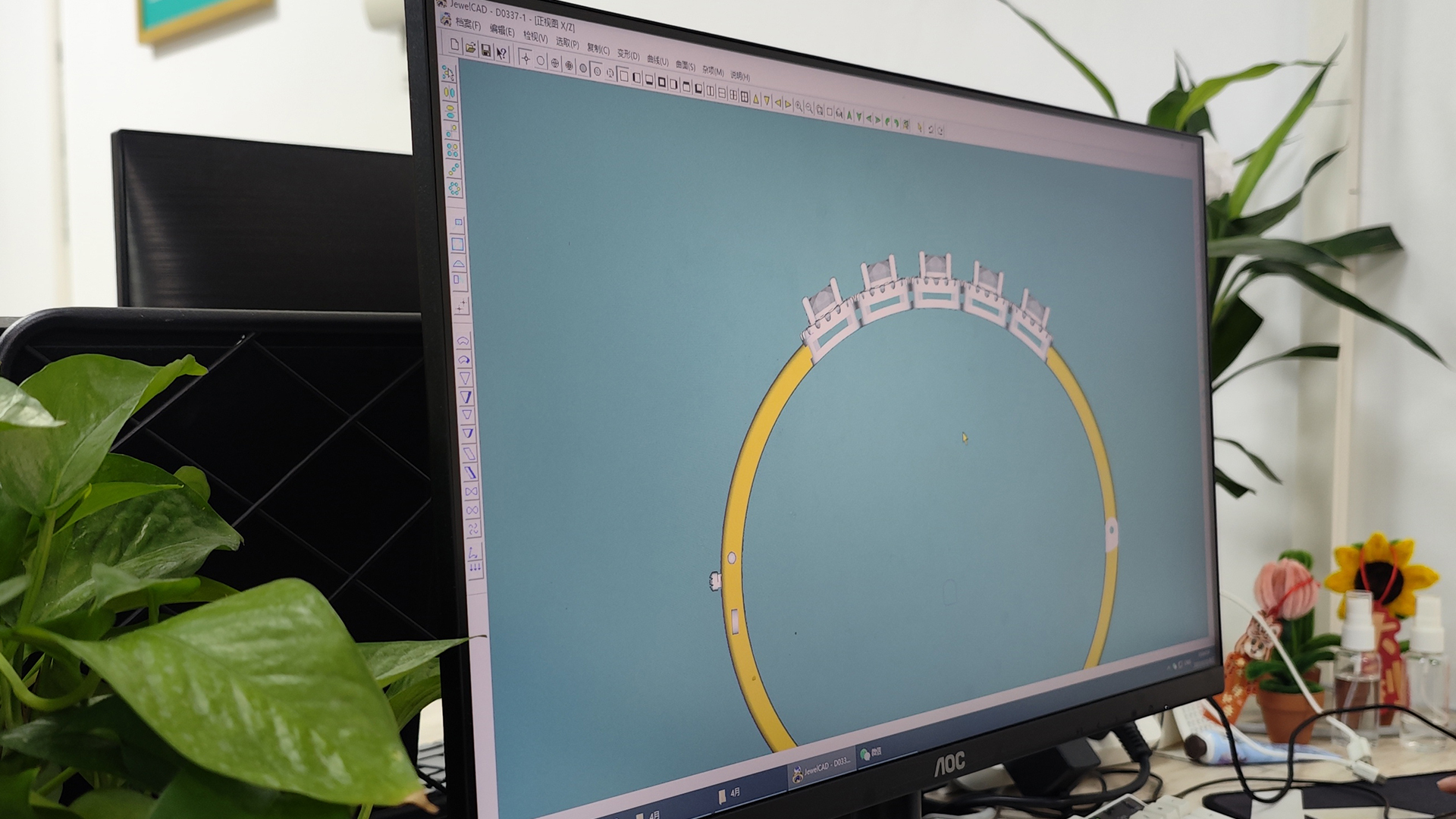
CAD is one of the points where an idea begins to become a manufacturing specification. Its purpose is not simply to create an attractive 3D image.
3.1 What Should Be Confirmed at the CAD Stage?
Depending on the product, buyers may need to review: stone dimensions, stone placement, shank width, metal thickness, prong structure, overall proportions, ring size, chain length, connection points, and other critical dimensions.
For OEM projects, revision control is also useful. For example: V1 → V2 → Final Approved This gives both the brand and the production team a clear answer to a simple but important question: Which version are we actually making?
3.2 Screen Color Is Not a Physical Finish
A CAD rendering cannot accurately replace a physical reference for: white, yellow or rose metal tones, gemstone color, plating appearance, or surface finish.
Different screens and rendering conditions can shift color significantly. If color is important to the collection, approve it on the physical sample.
4. Define the Metal and Gemstone Before Sampling
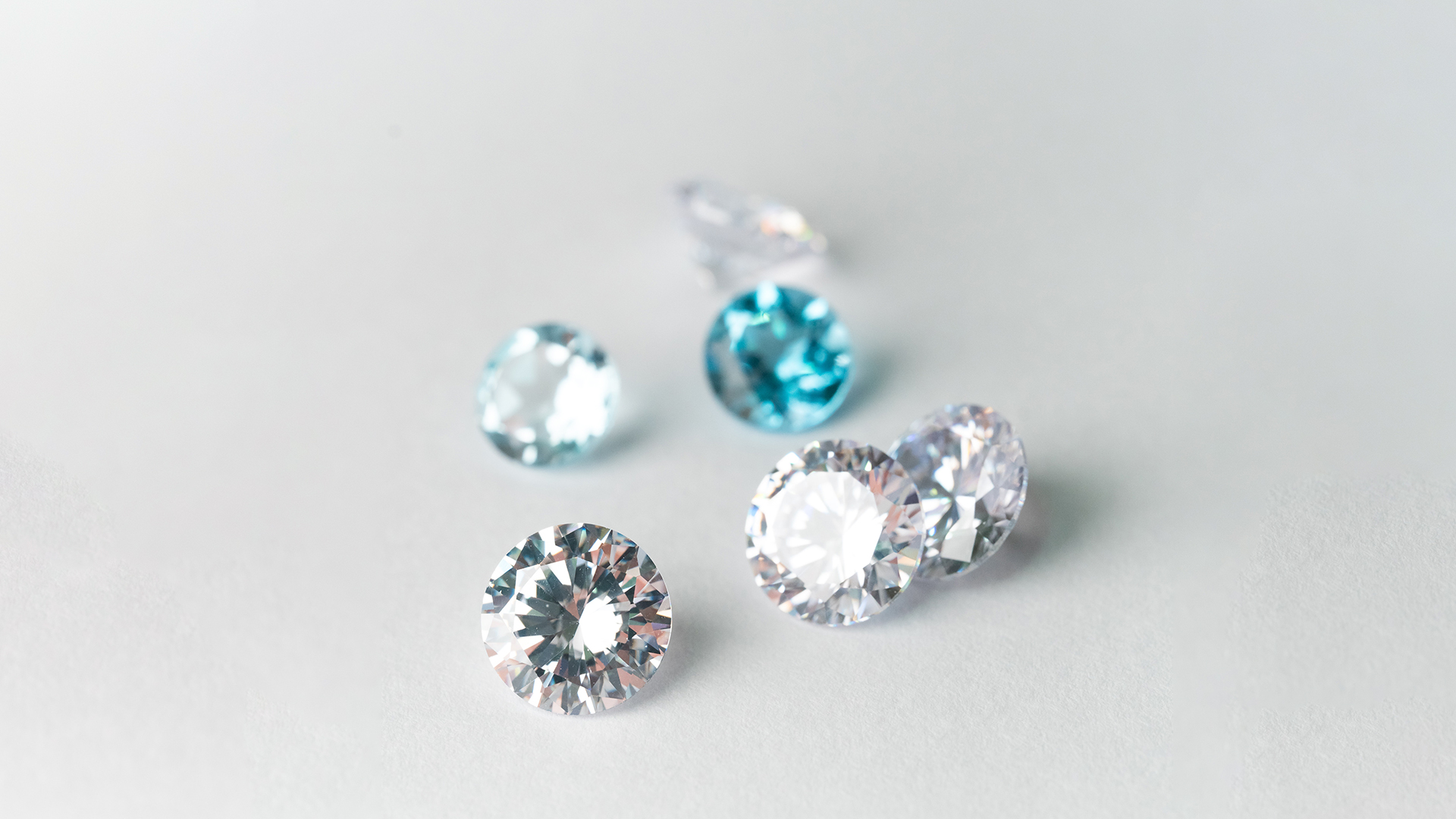
Many custom projects go wrong because the specification is too vague. For example: Gold ring with white stone. That may be enough to describe an idea.
It is not enough to release a product for manufacturing. A more useful specification might read: 14K White Gold + Oval Moissanite + 8 × 6 mm Center Stone
or: 18K Yellow Gold + Lab-Grown Diamond + Confirmed Stone Specification
Depending on the project, MOSUP can support jewelry development using materials such as: S925 Sterling Silver, 10K Gold, 14K Gold, 18K Gold, and Platinum, along with moissanite, lab-grown diamonds and lab-created gemstones.
The right combination should reflect: target retail price, market positioning, product structure, wear conditions, and budget. The lowest-cost option is not automatically the right one.
5. What Should a Physical Sample Actually Prove?
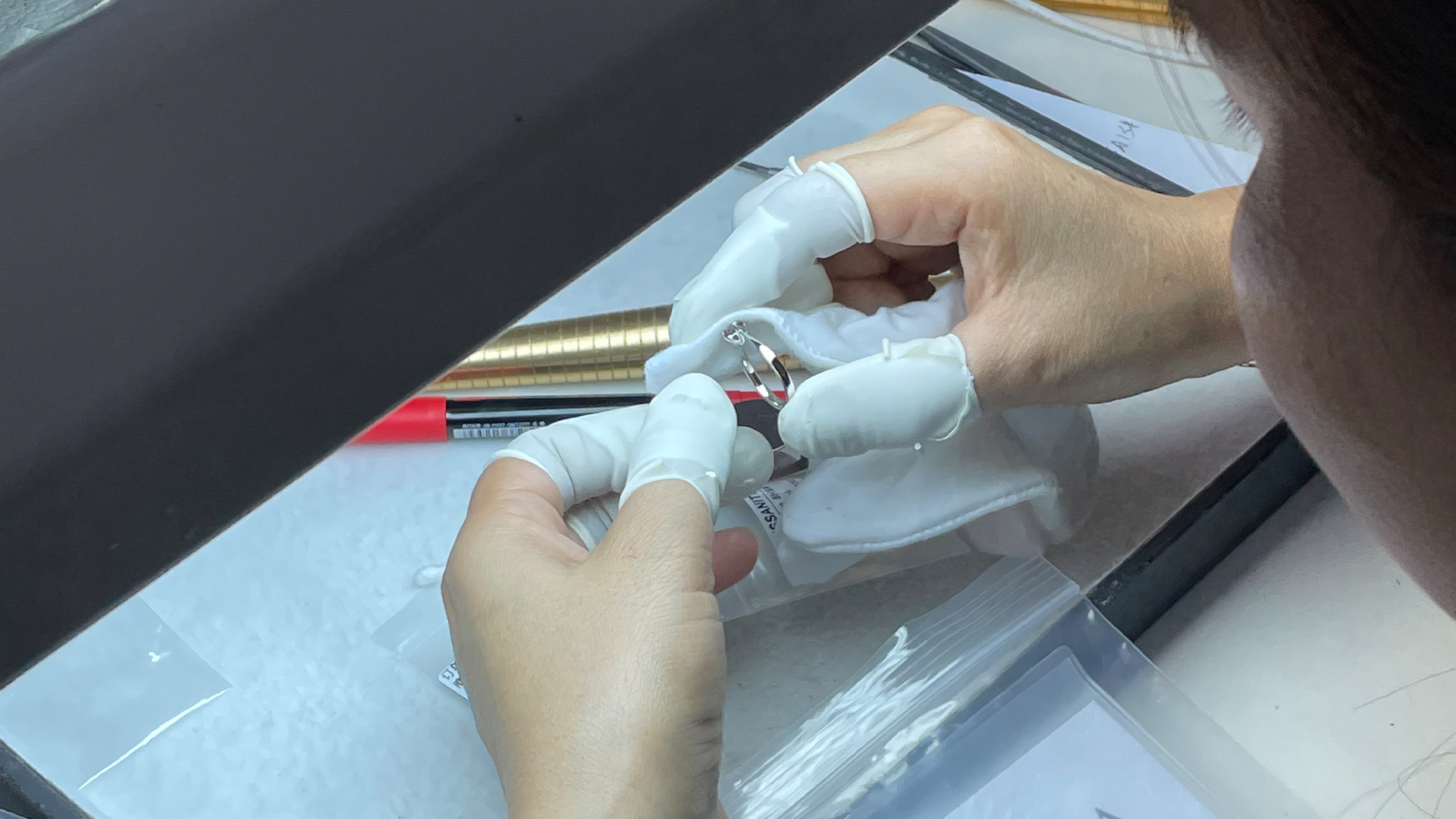
The physical sample is one of the most useful stages in custom jewelry development because some problems are difficult to judge from a screen.
For example:
- Does the ring feel comfortable?
- Is the setting too high?
- Are the earrings too heavy?
- Does the chain drape naturally?
- Does the center stone look proportionate?
- Do the prongs catch on fabric?
- Are the edges smooth?
- Does the clasp operate comfortably?
- Does the metal color fit the collection?
5.1 MOSUP Sample Orders Have No MOQ
MOSUP provides a dedicated Sample Order Service with no minimum order quantity.
A brand may: start with one sample, order several versions for comparison, or select multiple samples for photography, internal review or product testing.
This is especially useful for new collections. At the development stage, the goal is not necessarily to secure the lowest unit price.
The first goal is: to confirm that the product is right before committing more inventory.
5.2 No MOQ Does Not Mean No Development Cost
A sample project may still involve: CAD development, special tooling, custom stones, logo engraving, private-label packaging, or third-party laboratory reports.
These requirements should be quoted according to the actual project. “No MOQ” means: there is no forced minimum sample quantity. It does not mean every customization service is automatically included at no additional cost.
6. Do Not Approve a Sample Based Only on Appearance
A useful sample approval should cover visual, structural and functional details.
| Area | What the Buyer Should Check | Why It Matters |
|---|---|---|
| Center Stone | Shape, millimeter dimensions, proportion | Defines the product's visual balance |
| Setting | Stone security, prongs, accent stones | Affects repairs and after-sales risk |
| Metal | Alloy, color, finish | Affects cost and positioning |
| Dimensions | Ring size, chain or bracelet length | Directly affects sellability |
| Polishing | Scratches, tight areas, surface quality | Affects perceived workmanship |
| Wearability | Weight, edges, comfort | Cannot be fully judged from CAD |
| Branding | Logo position, size and clarity | Important for private label consistency |
| Packaging | Fit, protection, presentation | Affects the final retail experience |
If something needs to change, the sample stage is the best time to change it. Structural modifications become more expensive once bulk production begins.
7. Turn the Approved Sample Into a Production Reference
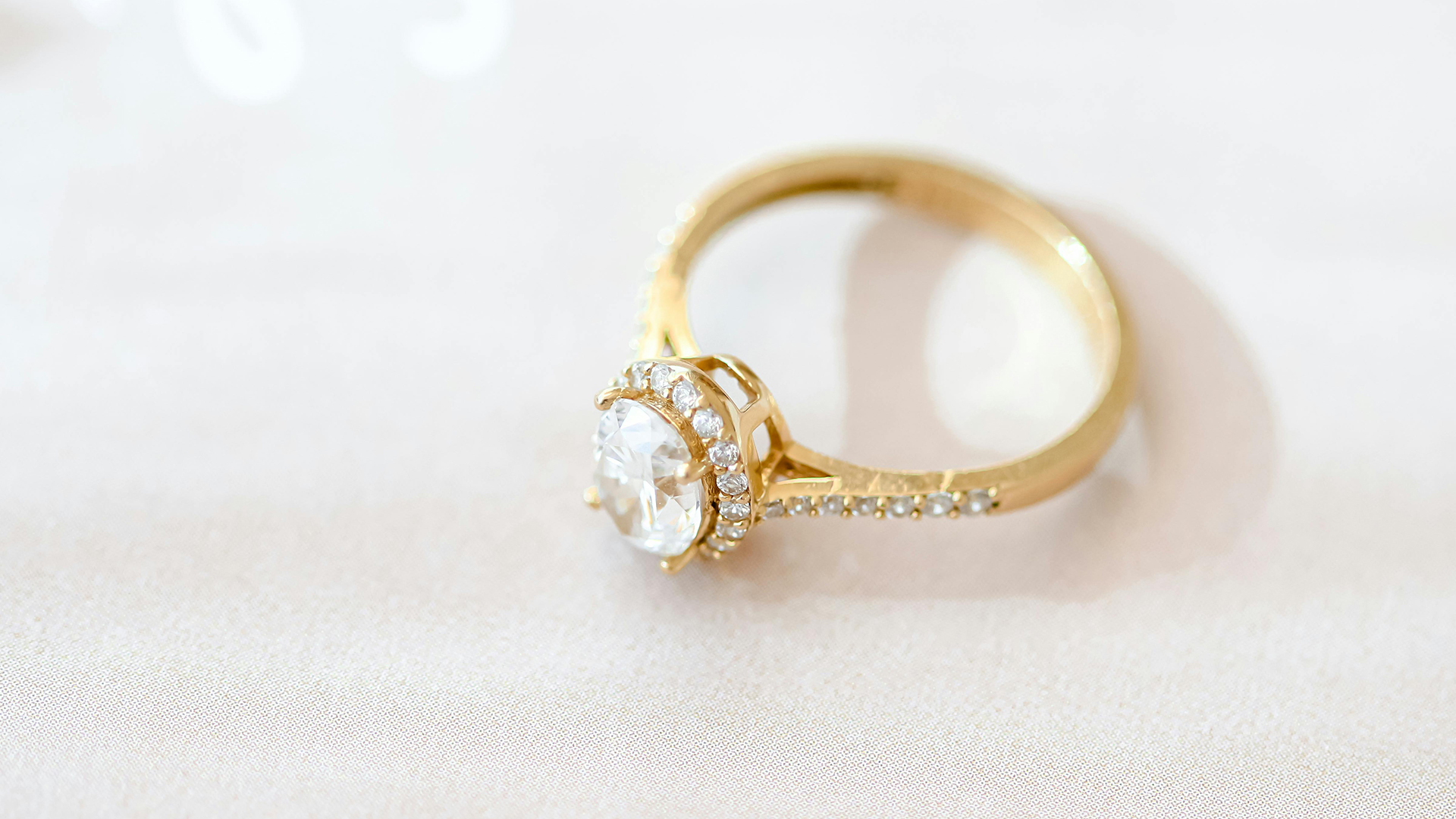
Once the final sample is approved, it should become an Approved Sample or Golden Sample whenever practical.
The approved physical product should correspond with the final: CAD revision, metal specification, stone specification, surface finish, branding, and packaging requirements.
This reduces a common sourcing problem: “I remember the first sample looking different.” Instead of relying on memory or old messages, the next production batch can be compared with an agreed reference.
This becomes particularly valuable for reorders. A good supply chain does not only make one attractive sample. It should help a brand reproduce an approved product standard when the item is ordered again.
8. Sample Orders and Bulk Production Are Two Different Decisions
A sample answers: Is this product right? Bulk production answers: Can this product be reproduced consistently? Those decisions should not be treated as the same commercial stage. MOSUP Sample Orders have no MOQ.
The quantity for subsequent OEM or ODM production should still be confirmed according to: design, metal, manufacturing process, stone requirements, branding, and packaging.
For an unfamiliar product, a practical development sequence is often: Reference → CAD → Sample → Approval → Market Test → Bulk Production That allows the brand to validate the product before committing more inventory.
9. Freeze the Production Version Before Scaling
Once the sample, CAD and specification are approved, create a controlled production version.
If the buyer later changes: stone size, metal, prongs, plating color, components, or logo position, the change should be reviewed again.
A simple process is: Change Request → Technical Review → Updated CAD / Specification → Price & Lead-Time Review → Approval
This is much safer than sending an informal message such as: “Can you make this part slightly bigger?”
A small visual change may affect: weight, structure, cost, tooling, stone setting, or production timing.
10. Custom Jewelry Sample RFQ Checklist
Before requesting a sample quote, prepare:
- Product type or reference image;
- Elements that must remain and elements open to change;
- Preferred metal;
- Gemstone type, shape and size;
- Ring size, chain length or other critical dimensions;
- Required sample quantity;
- Whether CAD is needed;
- Logo engraving requirements;
- Jewelry box or packaging requirements;
- Target market and expected next-stage order plan.
If a specification is not decided yet, state: Open to Manufacturer Recommendation That is usually more useful than providing an uncertain specification that may later need to be corrected.
11. FAQ: Custom Jewelry Samples
11.1 Can I Start a Custom Jewelry Project With Only a Reference Image?
Yes. A reference image can begin the discussion, followed by technical review, material selection and CAD development where needed. If the image contains a proprietary third-party design, the buyer should confirm usage rights and avoid unauthorized direct copying.
11.2 Does MOSUP Have an MOQ for Sample Orders?
No. MOSUP Sample Orders have no minimum order quantity. You may begin with one sample or order several samples depending on the project.
11.3 Does No-MOQ Sampling Mean OEM Bulk Production Also Has No MOQ?
No. Sample orders and bulk custom production are separate commercial stages. Bulk production quantities should be confirmed according to the actual design, material and manufacturing requirements.
11.4 Does Every Sample Require CAD?
Not necessarily. An existing style or a simple modification may not require a completely new CAD development process.
New structures, dimensional changes and deeper OEM projects are more likely to require CAD.
11.5 Is a Third-Party Certificate Automatically Included With a Sample?
Not necessarily. If an IGI or other laboratory report is required, confirm the report type, tested item, additional cost and whether it applies to a loose stone or finished jewelry before ordering.
12. The First Sample Is the Beginning of a Repeatable Product
The best custom jewelry sample is not simply one that: looks good. It should also be: clearly specified, wearable, inspectable and useful as a reference for what comes next.
MOSUP supports jewelry brands developing products from reference images, sketches, existing samples and product concepts, with services including CAD, sample orders, OEM/ODM development, logo engraving, private-label packaging and quality control.
With no MOQ for Sample Orders, brands can validate an idea before committing to larger inventory.
Once the sample proves the product direction, the next decision becomes much easier: test the market, refine the product, or move into scaled production.
13. Ready to Develop Your First Custom Jewelry Sample?
Send MOSUP: reference image / design + metal + gemstone + key dimensions + sample quantity + logo / packaging requirements + target market
If some specifications are still open, they can be reviewed during development.
A typical next step is: Reference Image → Technical Review → CAD → Sample → Approval
→ Explore the MOSUP Jewelry Catalog
→ Read the OEM / ODM Jewelry Manufacturing Guide
→ Read the Jewelry Sample vs. Bulk Production Guide
→ Contact MOSUP About a Sample or Custom Project


