
Not every successful custom jewelry project needs to begin with a completely new design.
Sometimes, the best starting point is an existing structure that already works well — and then refining the materials, colors, proportions and details until it feels completely different.
That was the approach taken by one of our jewelry brand clients from Croatia.
The client was developing new products for a more premium jewelry line and wanted something elegant, colorful and easy to recognize. At the same time,
he did not want the collection to look like the standard white-stone jewelry that customers could already find across many stores.
Instead of creating the entire product from zero, he selected one of Mosup's existing bracelet designs and used it as the base for a customized 18K gold lab-grown gemstone collection.
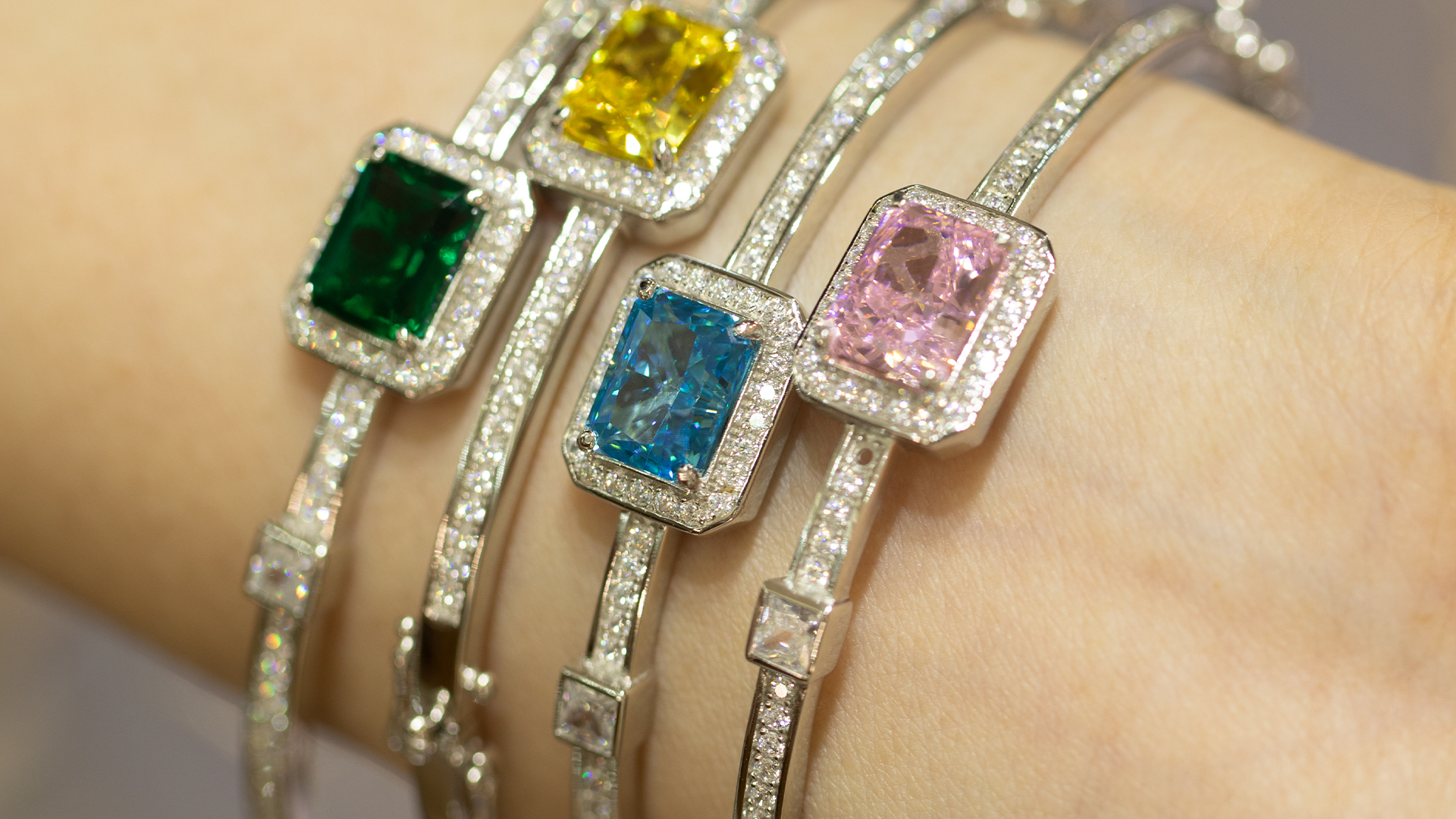
The final series featured bold yellow, pink, green and blue center stones surrounded by bright accent stones, all within the same refined bracelet structure.
The result was a collection that felt coherent enough to belong together, but distinctive enough for each color to have its own personality.
After launch, the collection received a positive response in the client's local market and became a strong addition to the brand's premium product range.
1. The Client's Request Was Simple: Premium, but Not Ordinary
At the beginning of the project, the client did not send us a complete CAD drawing or a fully developed technical design.
Instead, he browsed Mosup's existing products and selected several styles that he felt could fit his brand.
One bracelet immediately stood out.
The basic construction was already elegant:
a rectangular center stone, a halo of smaller stones around the main g emstone, pavé details along the bracelet, and a slim overall silhouette.
Structurally, it was already a mature product.
But the client did not want to simply purchase the existing design and place it into his collection.
His idea was very straightforward:
“I like the structure, but I want it to feel like part of my own brand.”
This is actually a very common request among independent jewelry brands.
Customization does not always mean creating something completely unfamiliar.
Often, it means identifying which parts of an existing design already work — and then changing the elements that make the final product feel unique to the brand.
2. Why We Introduced Color Instead of Another Classic White-Stone Design
The client's premium collection already included several classic white-stone pieces.
Adding another white center-stone bracelet would have been safe, but it would not have created much visual differentiation.
So one of the main directions of the new collection became color.
The final group included several highly recognizable tones:
bright yellow, soft pink, deep green and vivid blue.
Placed together, the four colors create a very strong visual story.
But when viewed individually, each bracelet gives a different impression.
The yellow version feels bold and energetic.
The pink version is softer and more feminine without becoming overly sweet.
The green version has stronger depth and a more luxurious visual presence.
The blue version feels clean, contemporary and especially striking against a white-metal setting.
For the brand, this created an important commercial advantage.
Instead of offering only one bracelet, the client could offer a complete color story.
Customers were no longer simply deciding:
“Do I like this bracelet?”
They were also deciding:
“Which color feels most like me?”
That creates a different kind of buying experience.
3. From an Existing Product to a More Premium Custom Design
This project was not simply about replacing one center stone with another.
Once a white-stone design is converted into a colored gemstone piece, the balance of the whole product changes.
Colored center stones naturally attract more attention.
If the surrounding design is too complicated, the product can quickly feel visually crowded.
But if the setting is too simple, it may no longer support the premium positioning the client wanted.
So the development process focused heavily on proportion.
We kept the clean rectangular center-stone layout and refined the relationship between the main gemstone, halo, bracelet width and pavé details.
The goal was to make the color the first thing a customer notices.
Then, when they look more closely, they discover the setting details and craftsmanship.
From a distance, the bracelet is defined by color.
Up close, it is defined by finishing.
That balance was important because the client did not want the collection to look expensive simply because it was large or flashy.
The desired effect was more subtle:
premium through material, color and detail.
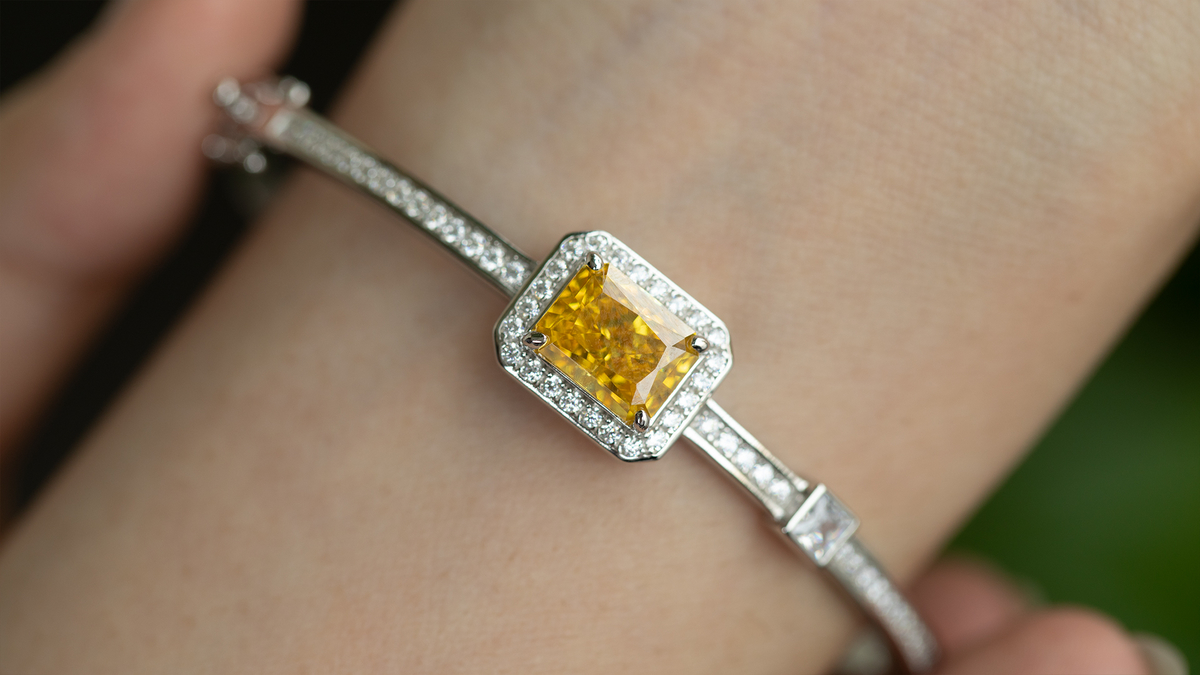
The yellow center stone creates a strong focal point while the surrounding halo keeps the overall design refined.
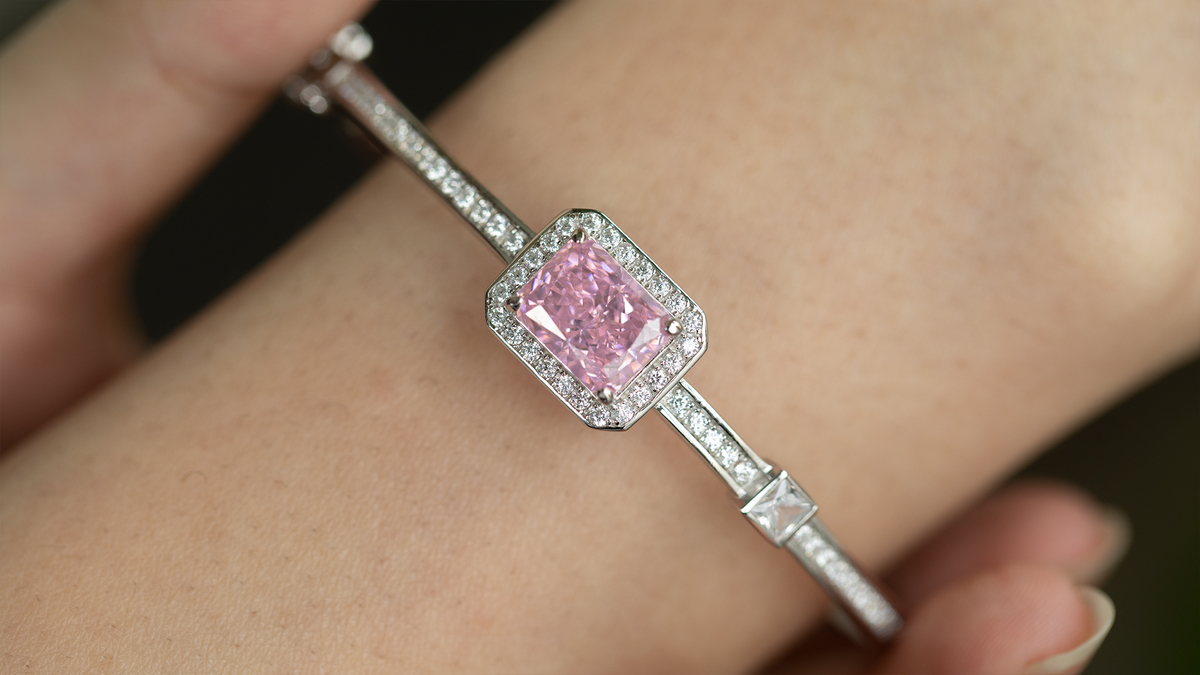
The pink version offers a softer expression while maintaining the same structured fine-jewelry silhouette.
4. Why the Client Chose 18K Gold
The client planned to position this collection within the higher end of his jewelry range, so 18K gold was selected for the project.
This decision was not based only on material value.
For jewelry with a strong center stone and multiple small accent stones, the quality of the metal and finishing contributes directly to the overall impression of the piece.
When customers see a product online, color and design attract attention first.
But when they hold it in person, other things begin to matter:
the metal surface, the weight, the setting quality, the polishing and the consistency of the small details.
All of those factors contribute to whether a piece feels like premium jewelry or simply a visually attractive fashion item.
For this reason, the collection was never developed around the lowest possible production cost.
The more important question was:
Will customers feel that this product belongs in the brand's premium line?
That is often a better way to think about material selection.
The cheapest combination is not always the most profitable one.
A better material and stronger product presentation can create more room for retail positioning and brand margin.
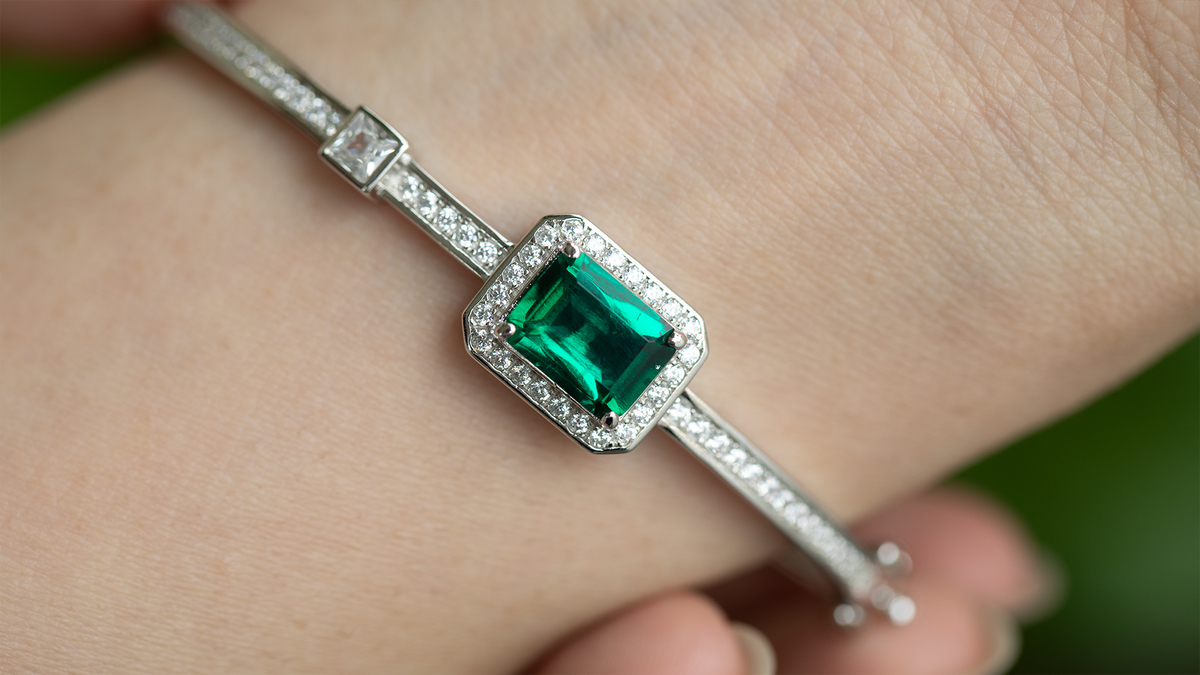
The deep green center stone gives the collection a stronger luxury feel and clear visual differentiation.
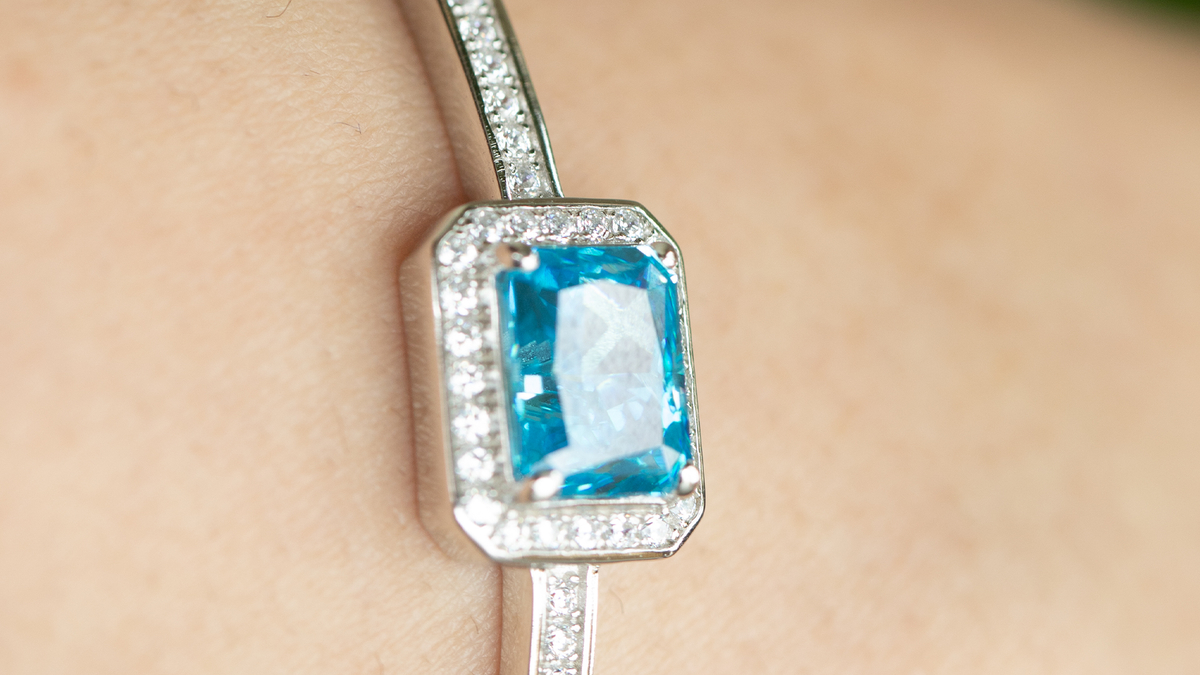
The blue version creates a cleaner, more modern visual identity within the same bracelet family.
5. One Structure, Multiple Colors: Why This Worked Well Commercially
One of the most practical advantages of the project was the strong sense of collection.
The yellow, pink, green and blue bracelets clearly belong to the same product family.
That gives the brand several commercial benefits.
The products can be photographed together.
They can be presented in the same campaign.
They can share the same display concept.
And customers can easily compare one color with another.
This works especially well for:
new collection launches,
social media campaigns,
retail display,
seasonal promotions,
and online category pages.
From a merchandising point of view, a coordinated color collection often creates a stronger impression than several unrelated products.
It also makes content creation easier.
One model, one styling concept and one visual campaign can be used to communicate multiple SKUs at the same time.
For independent brands, that efficiency matters.
6. The Local Market Response: Different Enough to Be Remembered
After the bracelets were introduced into the client's premium line, the collection received positive feedback in the Croatian market.
One reason was its visual differentiation.
Classic white-stone jewelry remains important, but it is also widely available.
The colored center stones allowed this collection to stand out without becoming too experimental.
The bracelets still felt refined and wearable.
But they did not look interchangeable with standard pieces offered by many other brands.
That distinction matters.
For an independent jewelry business, the question is not only:
“Do I have this product?”
A more important question is:
“Why should a customer buy this product from my brand?”
If the same-looking piece appears in ten different stores, price easily becomes the main point of competition.
But when a brand creates differentiation through color, material, details and product presentation, it has more freedom to build perceived value.
That usually gives the retailer more room to establish its own pricing strategy.
7. Why “Existing Design + Custom Modification” Can Be a Smart Development Strategy
Original design is important.
But not every new product needs to begin with an empty page.
For many independent jewelry brands, developing from an existing, proven structure can offer a useful balance between:
development efficiency, production stability, differentiation and inventory risk.
A brand can begin by selecting a Mosup in-stock or existing design that fits its aesthetic.
Then it can modify elements such as:
- center-stone color,
- stone size,
- metal,
- setting details,
- logo,
- branding,
- and packaging.
This creates something more differentiated than standard wholesale jewelry, while avoiding the time and cost involved in developing every structural element from scratch.
For brands that need to launch new products regularly, this approach can be highly practical.
8. Customization Does Not Always Mean Starting From Zero
The Croatian bracelet project illustrates an important point about custom jewelry manufacturing:
Customization is not about changing everything.
It is about knowing what is already working and identifying which details should be changed.
In this project, the proven bracelet structure remained.
What changed was the product language.
18K gold, colored lab-grown gemstones, carefully controlled proportions and a coordinated color strategy transformed an existing concept into a new premium collection for the client's brand.
The project started from a Mosup design.
But the finished series clearly belonged to the client's own jewelry line.
That is the type of customization we believe creates real value.
Not simply:
“You choose a product, and we manufacture it.”
But: Which parts should stay? Which parts should change? And what can make the final product more distinctive and commercially valuable?
For jewelry brands developing a new collection, the answer does not always have to start from zero.
Sometimes, a strong existing structure combined with the right material, gemstone color and product positioning can become the foundation of a completely new collection.
9. Developing a Custom Lab-Grown Gemstone Collection?
Mosup supports jewelry brands, retailers and wholesalers with OEM/ODM manufacturing, design modification, material customization, stone selection, logo engraving and private-label packaging.
You can begin with:
- an existing Mosup design,
- a reference image,
- a physical sample,
- or a completely new product concept.
From there, the design can be adapted to your market, target price and brand positioning.
Start with a proven structure. Customize what matters. Build a collection your customers can recognize.
→ Explore Lab-Grown Gemstone Jewelry
→ Start a Custom Jewelry Project
→ Contact Mosup for OEM/ODM Development
FAQ
Can Mosup customize an existing jewelry design?
Yes. Existing Mosup styles can be modified according to the client's brand positioning, including changes to stones, materials, structural details, logo and packaging.
Can I choose different lab-grown gemstone colors?
Custom projects can be developed with different stone colors and gemstone options depending on design requirements and availability.
Does Mosup manufacture 18K gold custom jewelry?
Yes. Mosup supports custom production in S925 sterling silver, 10K, 14K and 18K gold, as well as platinum.
Can I add my own logo to the jewelry?
Yes. Mosup supports logo engraving, laser marking and other private-label customization for eligible projects.
Can brands start with a small order?
Yes. Mosup supports small-batch production for custom projects, allowing brands to test new products before increasing inventory.
Does Mosup support private-label packaging?
Yes. Customized packaging can be developed according to the brand's requirements.