
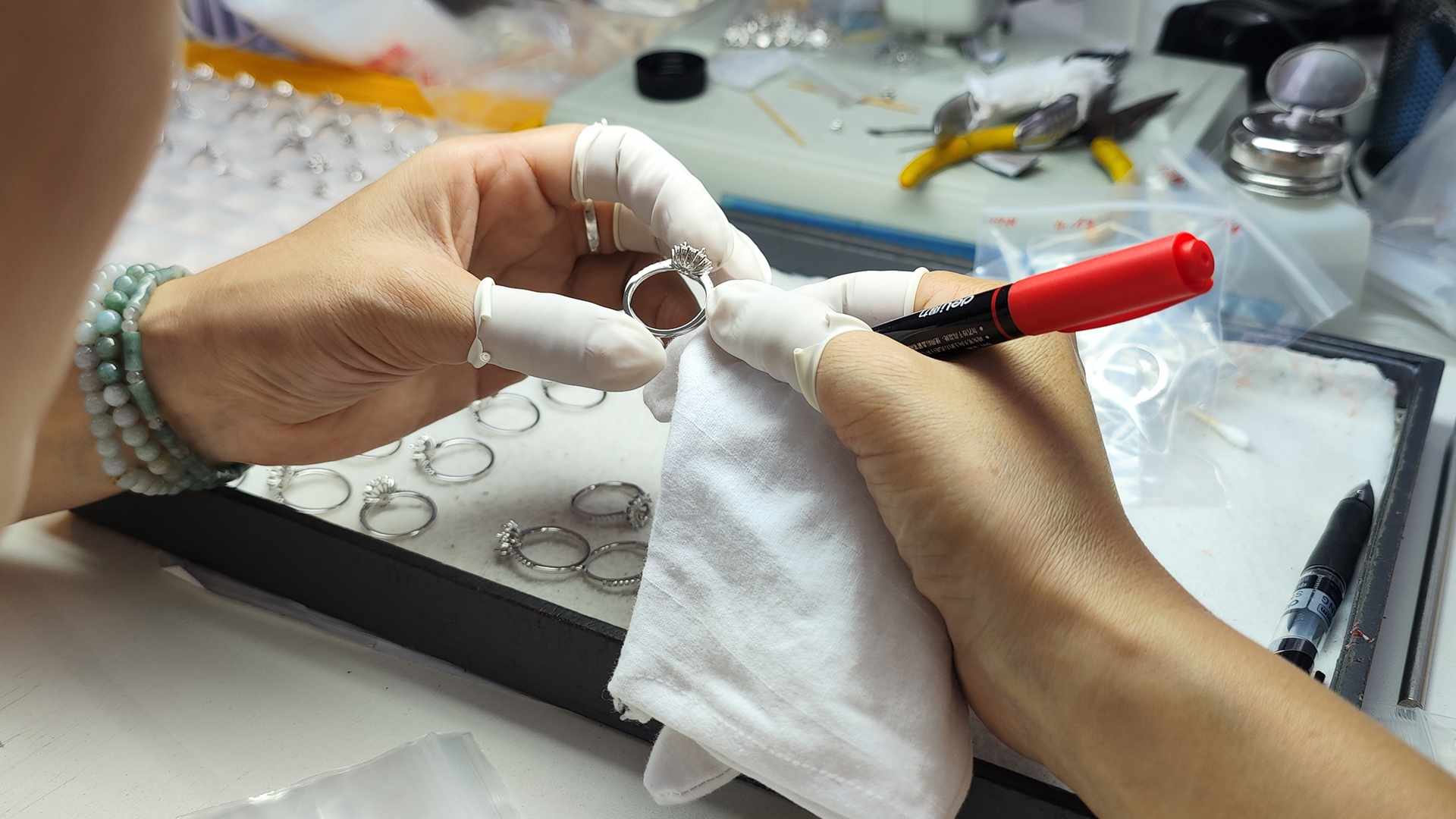
For jewelry brands, retailers and wholesale buyers, quality control should not begin when the finished pieces reach the inspection table.
By then, many of the most important quality decisions have already been made.
A ring may pass through: CAD Development → Wax Modeling / Wax Setting → Casting → Metal Finishing → Stone Setting → Grinding → Polishing → Plating → Final QC → Packing and Shipment
A problem at any of these stages can eventually appear as a loose stone, uneven prongs, incorrect sizing, rough metal surfaces, plating variation or visible differences between pieces in the same batch.
For B2B buyers, the useful question is therefore not: “Does the supplier say its quality is good?”
It is: “Does the production process provide enough control to reproduce the approved product consistently?”
1. Jewelry QC Is a Production System, Not Just a Final Inspection
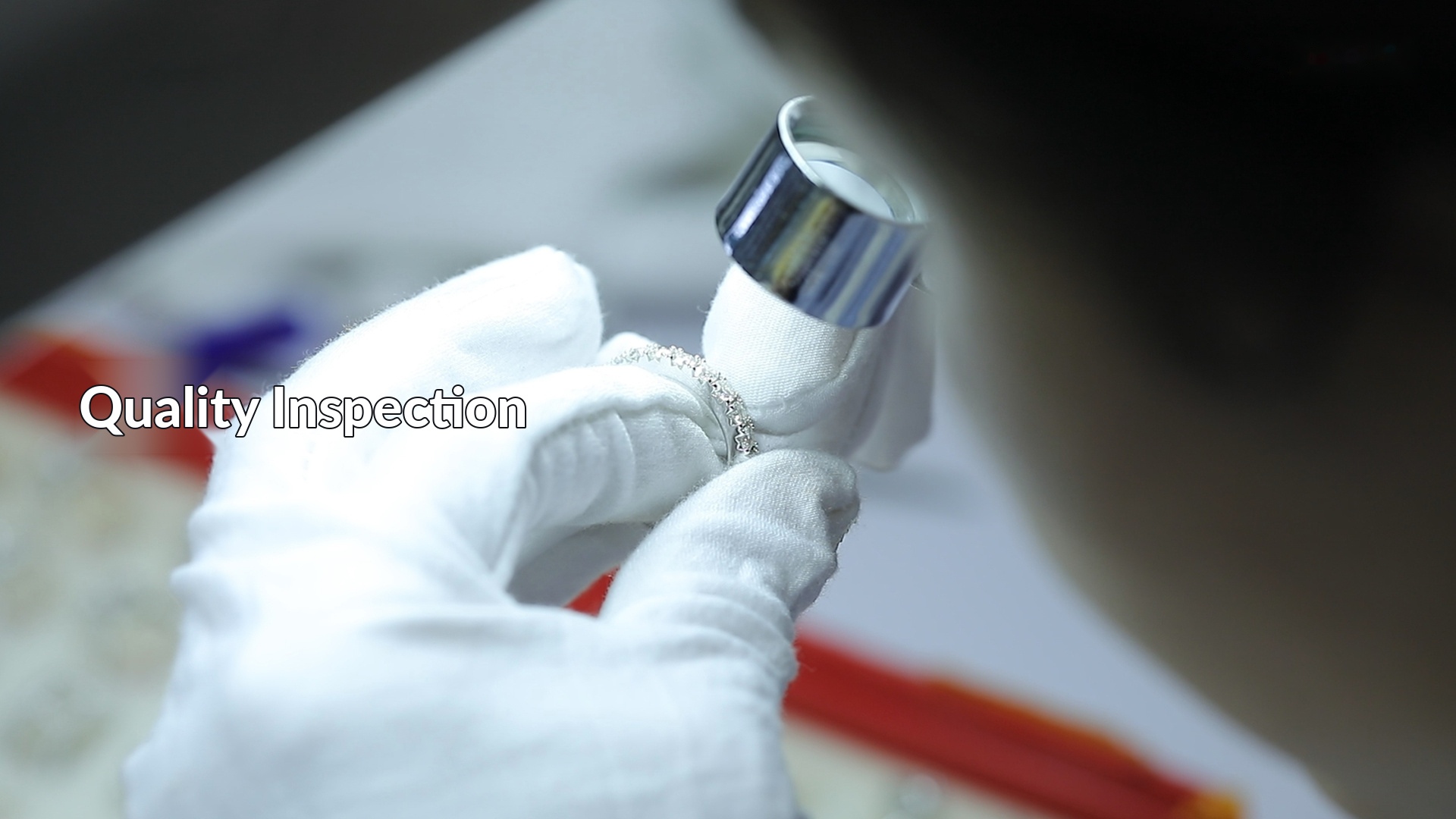
Many buyers think of quality control as a final check performed after production. Effective jewelry QC starts much earlier.
For OEM and ODM projects, quality control can be divided into three broad stages:
| QC Stage | Main Purpose | Typical Risk |
|---|---|---|
| Design & Sample | Convert the concept into manufacturable specifications | Structural issues, incorrect dimensions |
| Production Process | Control workmanship during manufacturing | Setting, surface and sizing variation |
| Final Inspection | Decide whether the finished goods are ready to ship | Batch inconsistency, defects reaching the buyer |
This is why one attractive sample does not automatically prove that a supplier can produce a reliable bulk order. Manufacturing capability is the ability to reproduce an approved standard — not only to make one good piece.
2. CAD Stage: Quality Control Starts with Manufacturability
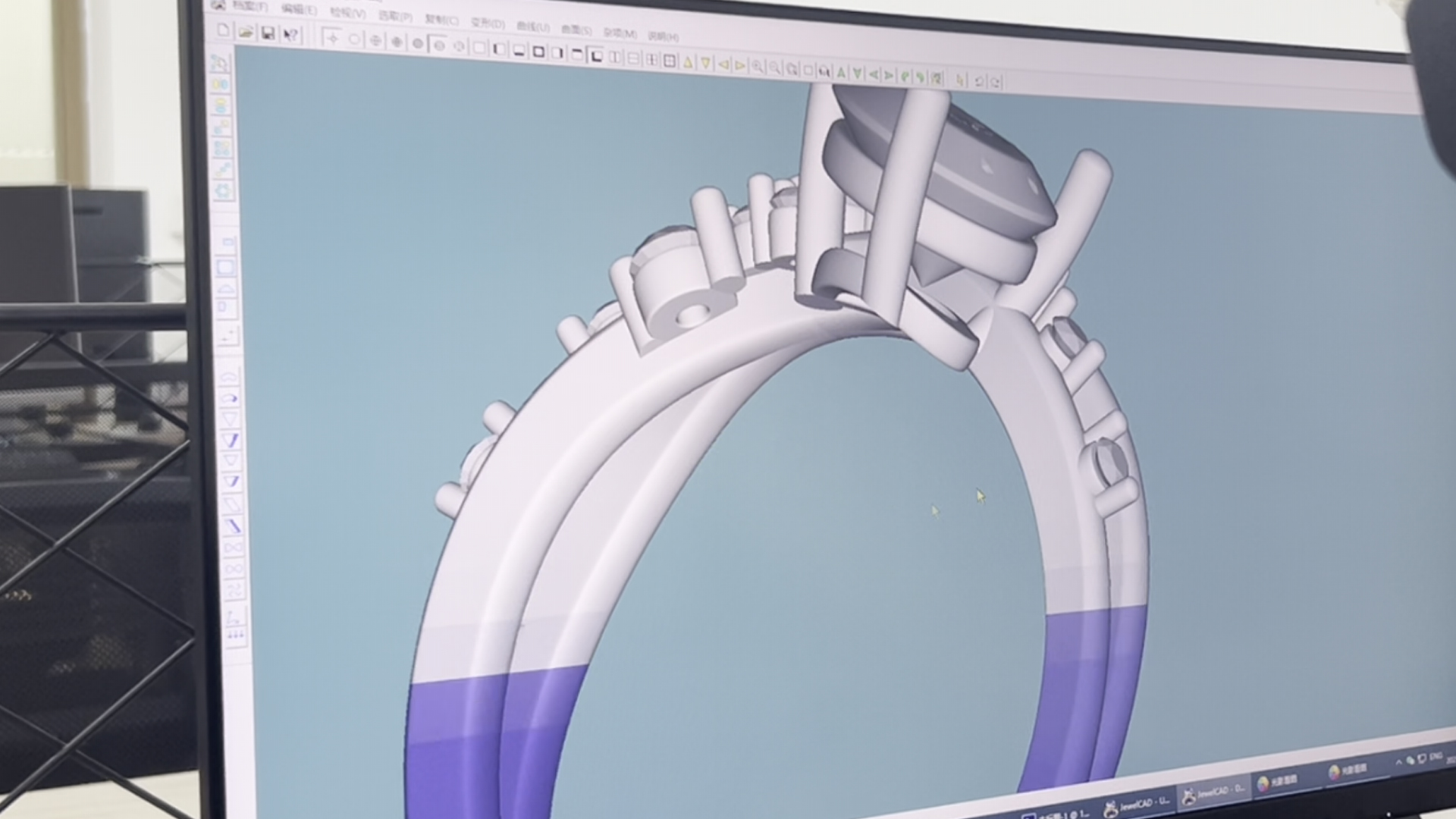
For custom jewelry, CAD is more than a visual rendering. It is part of the manufacturing specification. MOSUP can develop custom projects from design drawings, reference images, physical samples or product concepts before moving into CAD and sample development.
2.1 What Should Buyers Confirm at the CAD Stage?
Depending on the product, check:
- center-stone dimensions
- stone placement
- number and position of prongs
- ring-shank width
- overall proportions
- ring size or chain length
- connection points
- critical structural dimensions
For example, a 3 ct center-stone ring may look impressive from the front, but if the shank is too thin or the setting lacks sufficient support, the finished piece may be less stable in everyday wear. The goal is therefore not simply: “Make the CAD look like the picture.”
The goal is: “Translate the design into a structure that can be manufactured, worn and reproduced.”
3. Wax Modeling, Wax Setting and Casting Build the Structural Foundation
Once the design is confirmed, the project moves into model-making and casting-related processes. These stages establish the metal structure that later supports setting, finishing and wear.
3.1 What Matters During Wax Modeling?
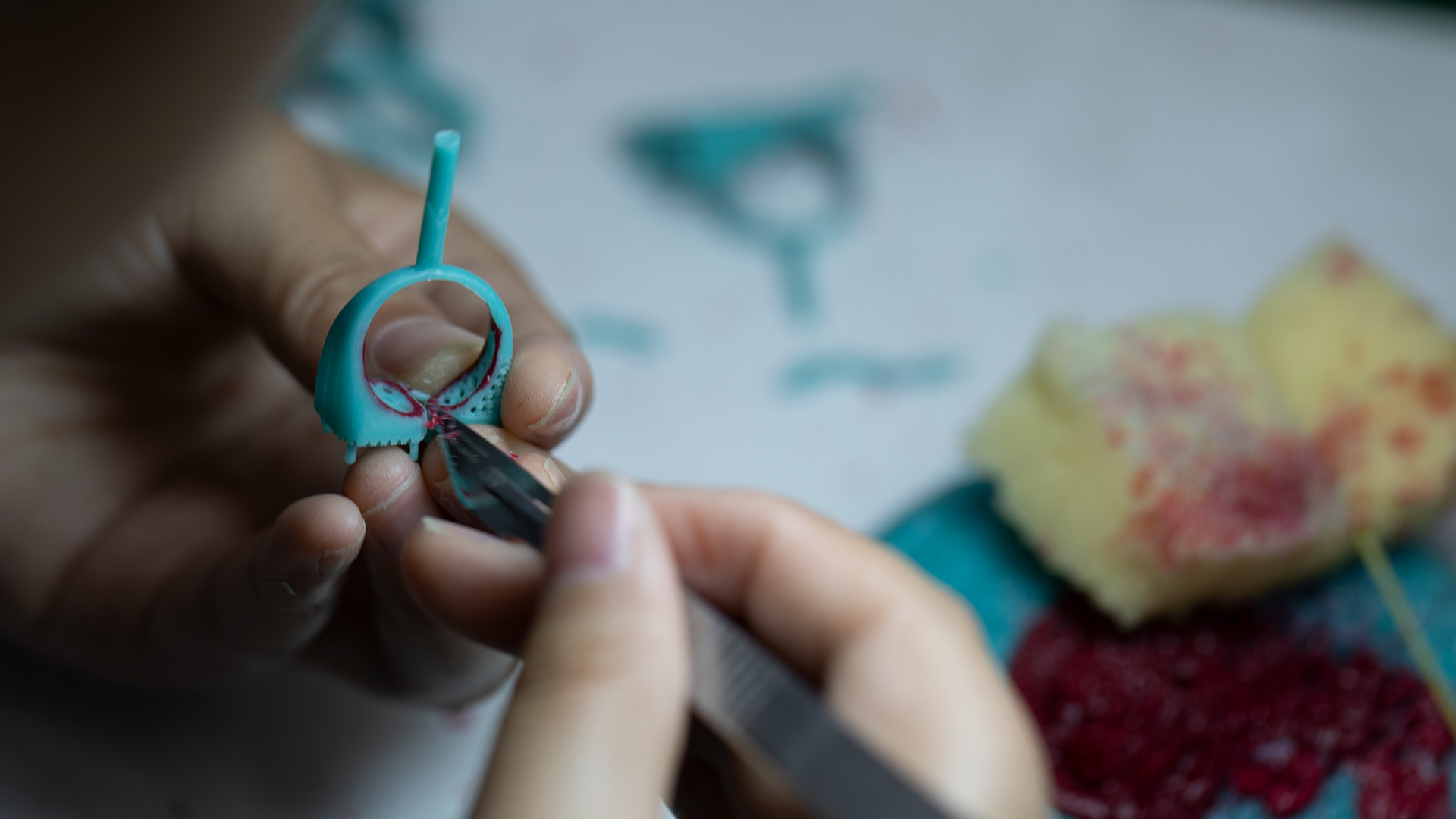
The wax model should maintain:
- complete structure
- clean outlines
- correct connection points
- accurate proportions
- no obvious missing sections
A defect in the wax stage does not usually disappear later in production. It may instead become more difficult or expensive to correct after casting.
3.2 Why Does Wax Setting Matter?
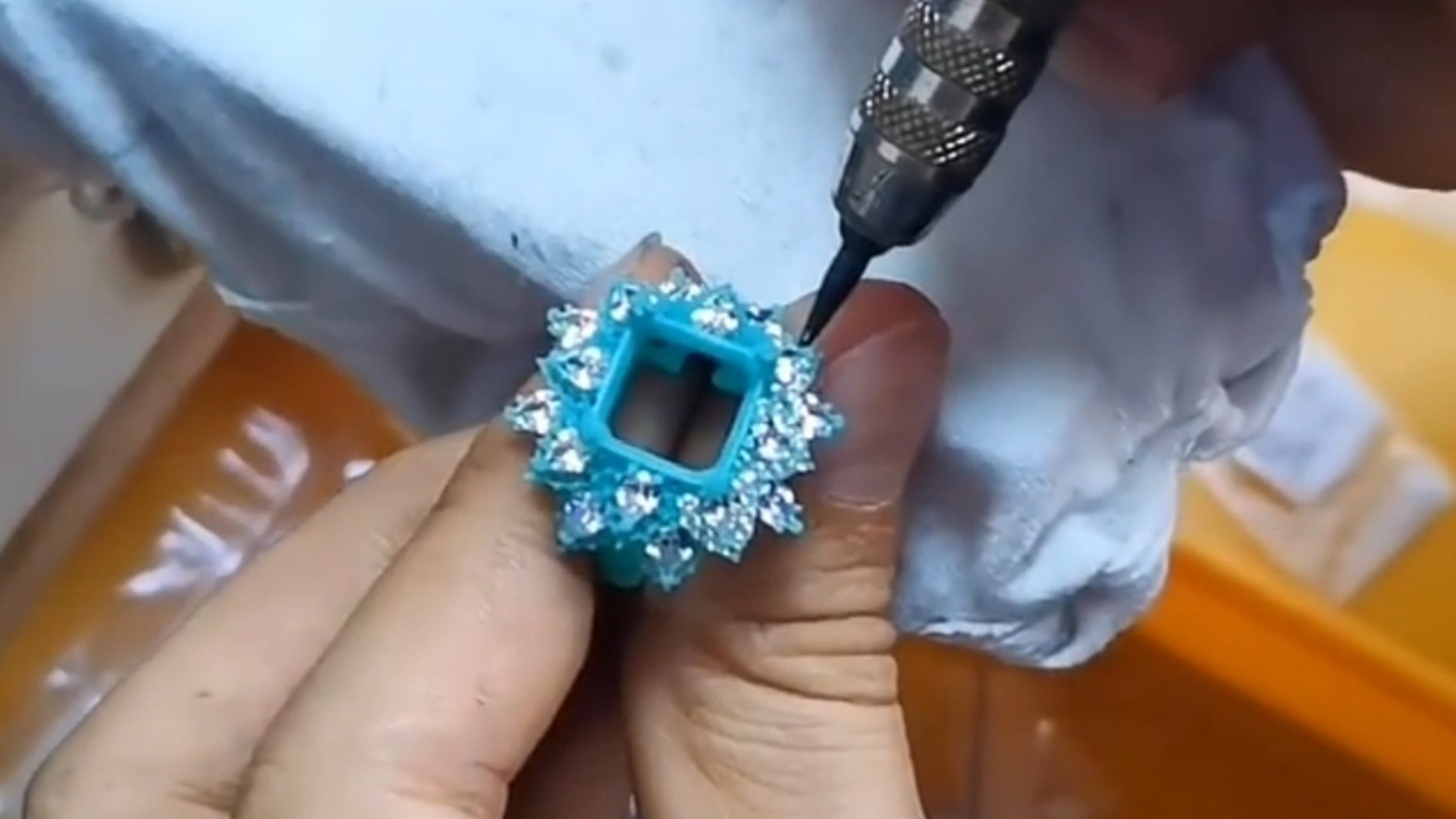
Some jewelry designs use stone positioning or setting-related preparation during the wax stage. For pavé, cluster or repetitive stone layouts, spacing and alignment matter because early positioning errors may become visible in the final jewelry.
Buyers do not need to understand every technical detail of wax setting. They should understand the commercial consequence: poor early-stage alignment can become a batch-consistency problem later.
3.3 Casting Is More Than “Pouring Metal”
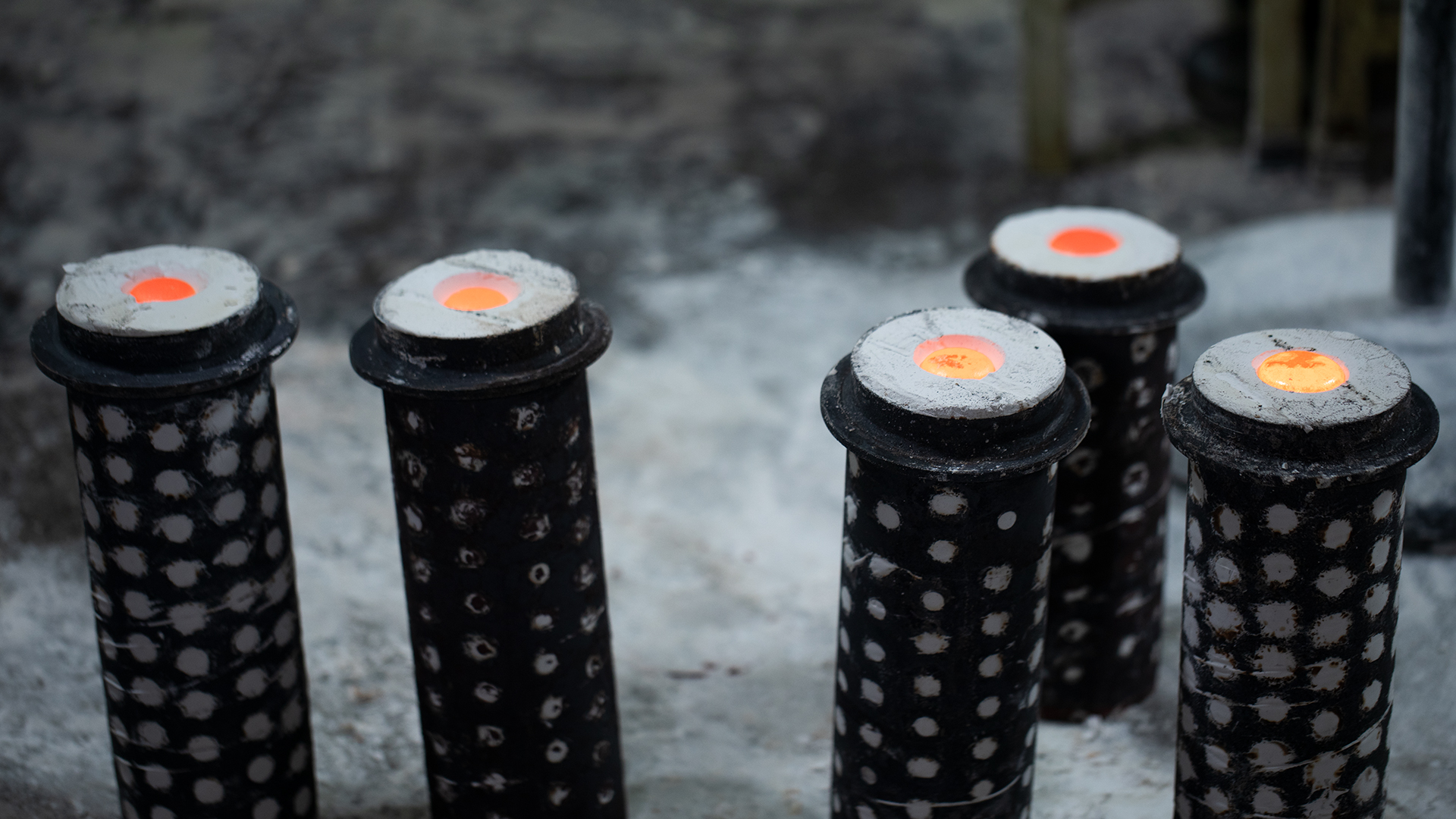
After casting, the metal structure should be inspected for issues such as:
- incomplete areas
- obvious porosity
- deformation
- weak connection points
- surface defects that may affect later finishing
Many surface problems that appear at the end of production actually begin earlier in casting. That is why final polishing cannot compensate for every structural defect.
4. Metal Finishing: Turning a Casting into a Setting-Ready Piece
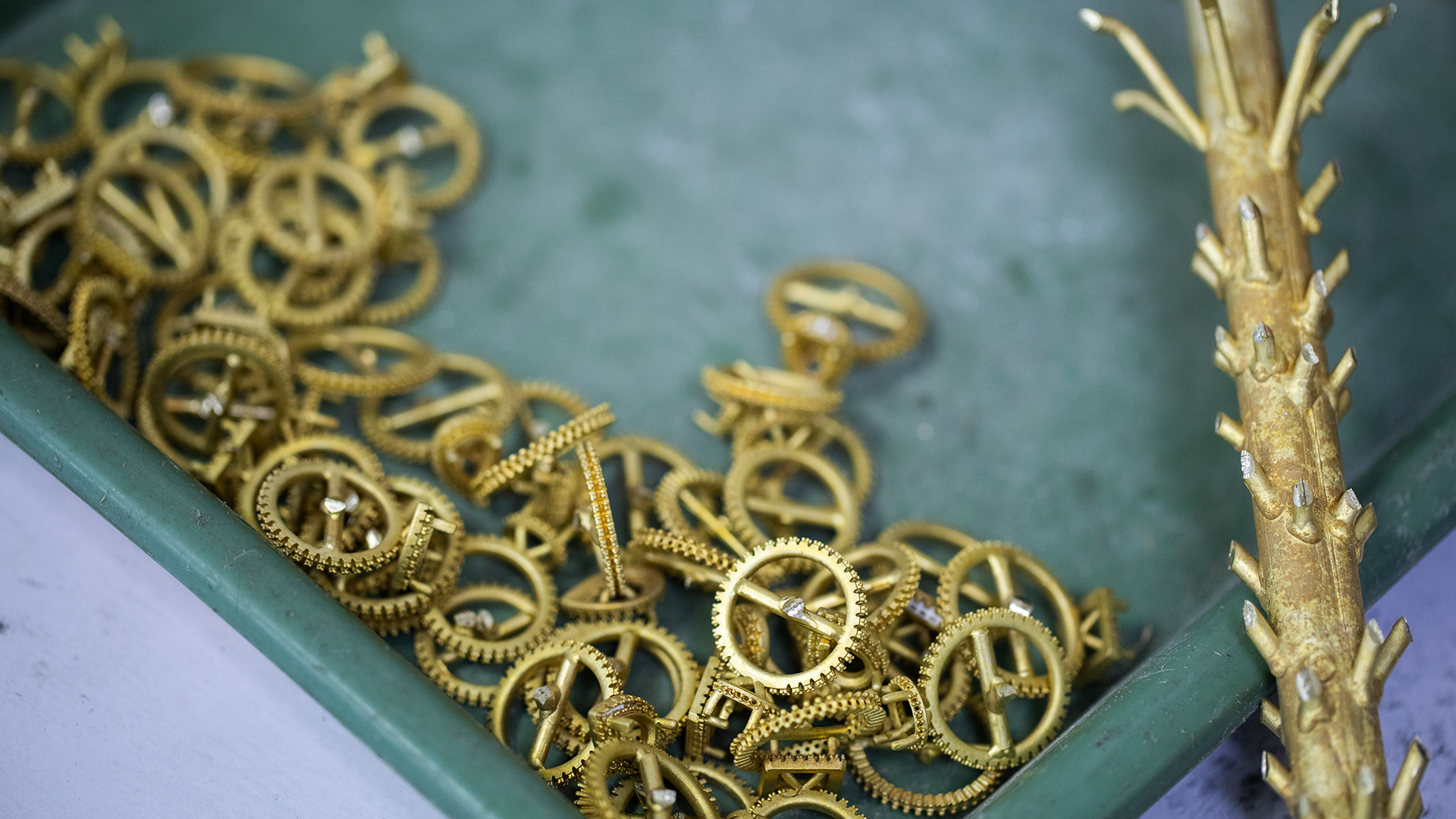
Fresh castings are not finished jewelry. They still require structural cleanup and refinement. This may include: removing excess metal, refining edges, adjusting settings, correcting the ring shank, and preparing the piece for stone setting.
4.1 What Should Buyers Pay Attention To?
Look for:
- sharp or rough edges
- obvious ring-shank deformation
- uneven setting areas
- asymmetrical structure
- poorly finished connection points
Many details customers describe simply as “good workmanship” are created at this stage. Small structural refinements have a significant effect on how the jewelry eventually feels and looks.
5. Stone Setting: One of the Most Important Areas for Returns and After-Sales Risk
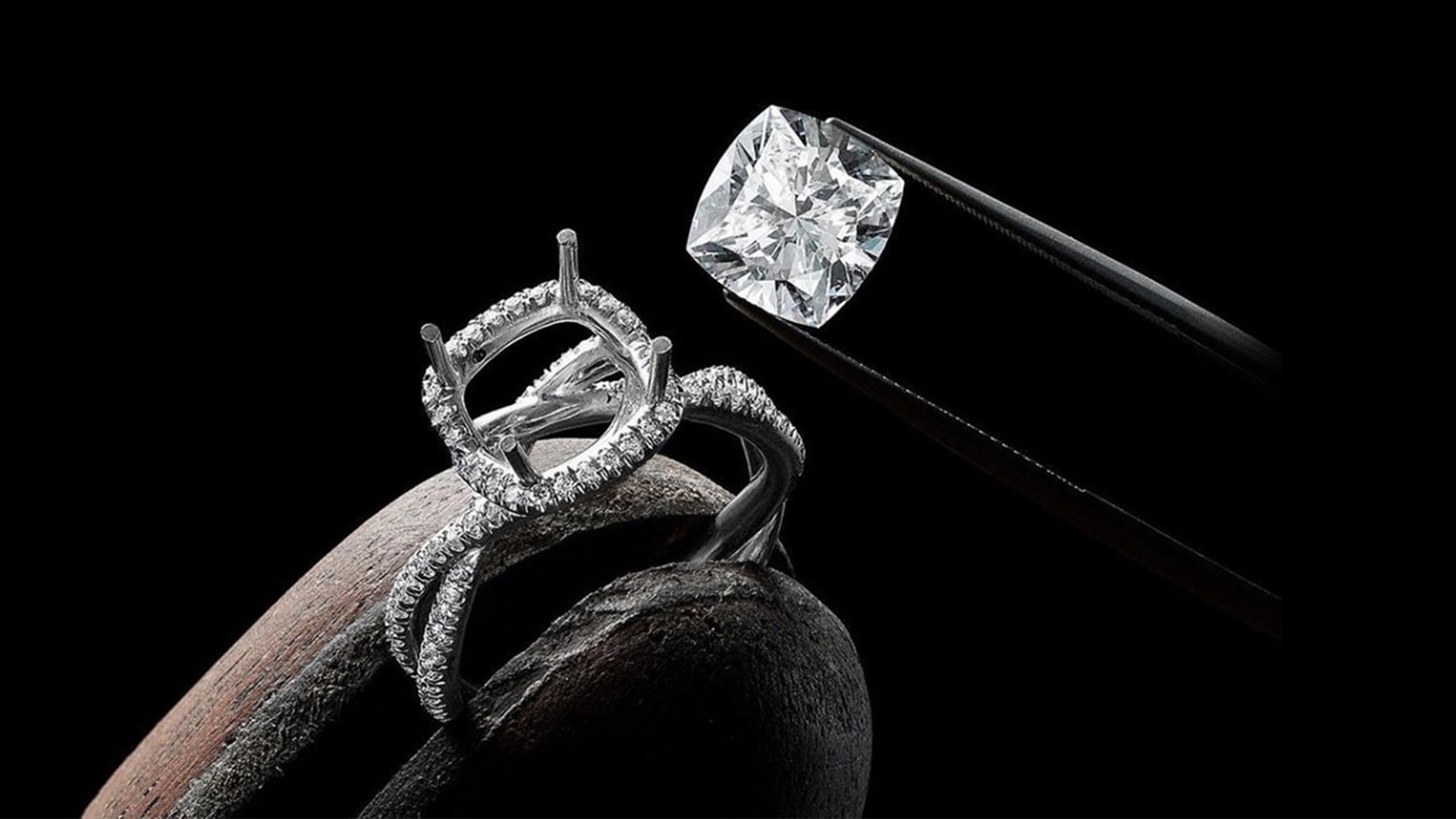
A high-quality moissanite, lab-grown diamond or lab-grown gemstone does not make a good product if the stone is not securely set. For B2B brands, loose stones can create costs far beyond the value of the stone itself.
A repair may involve: customer service + international shipping + repair labor + replacement + refund risk + negative customer experience
5.1 What Should Be Checked in Prong Settings?
Inspect:
- prong symmetry
- whether each prong properly secures the stone
- obvious height differences
- rough or sharp prong tips
- movement in the center stone
The setting should secure the stone without creating unnecessary sharp edges that can catch on clothing.
5.2 What Should Be Checked in Pavé or Multi-Stone Settings?
Look for:
- consistent stone alignment
- missing stones
- uneven stone height
- irregular spacing
- visible surface inconsistency
- loose accent stones
The stone type may change from moissanite to lab-grown diamond or lab-grown gemstone, but the basic QC principle is the same: the setting must remain secure and visually consistent.
6. Grinding and Polishing Determine the Visible Finish
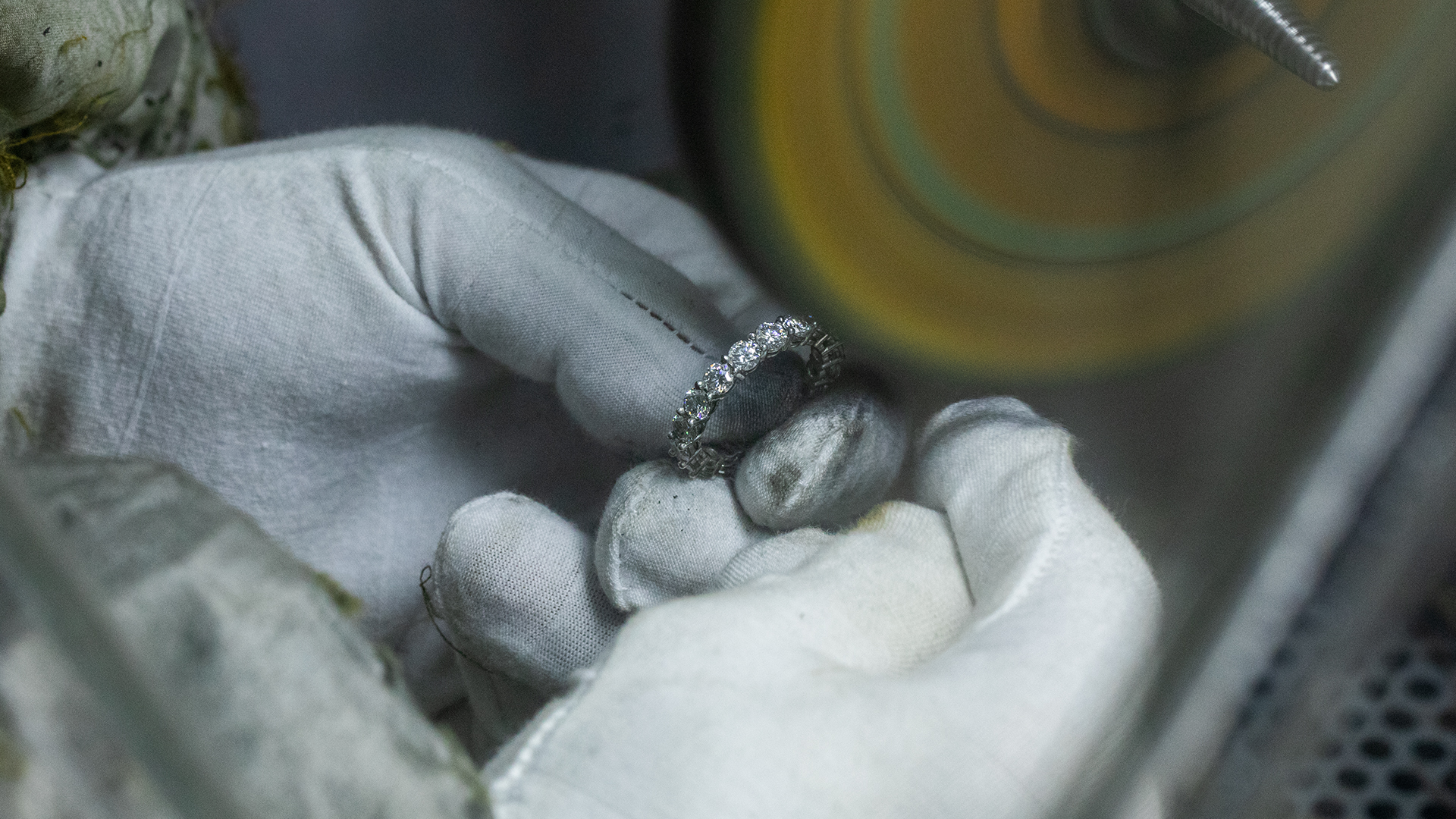
Customers see the finished surface before they understand anything about the manufacturing process behind it. Grinding and polishing therefore affect more than appearance.
They influence: shine, surface smoothness, edge feel, design definition, perceived workmanship.
6.1 Which Surface Problems Matter?.
Buyers should watch for:
- visible scratches
- uneven surfaces
- unfinished areas
- rough edges
- polishing residue
- inconsistent shine between sections
At the same time, quality standards should remain realistic.
Jewelry is manufactured by a combination of tools, machines and skilled handwork. Extremely minor production marks that are not visible at normal viewing distance should not automatically be treated the same as defects that affect presentation or wear.
This is why a professional acceptance standard may distinguish between: Critical Defect, Major Defect and Acceptable Minor Variation
instead of using an undefined phrase such as: “Perfect Quality.”
7. Plating and Metal Color: Batch Consistency Matters
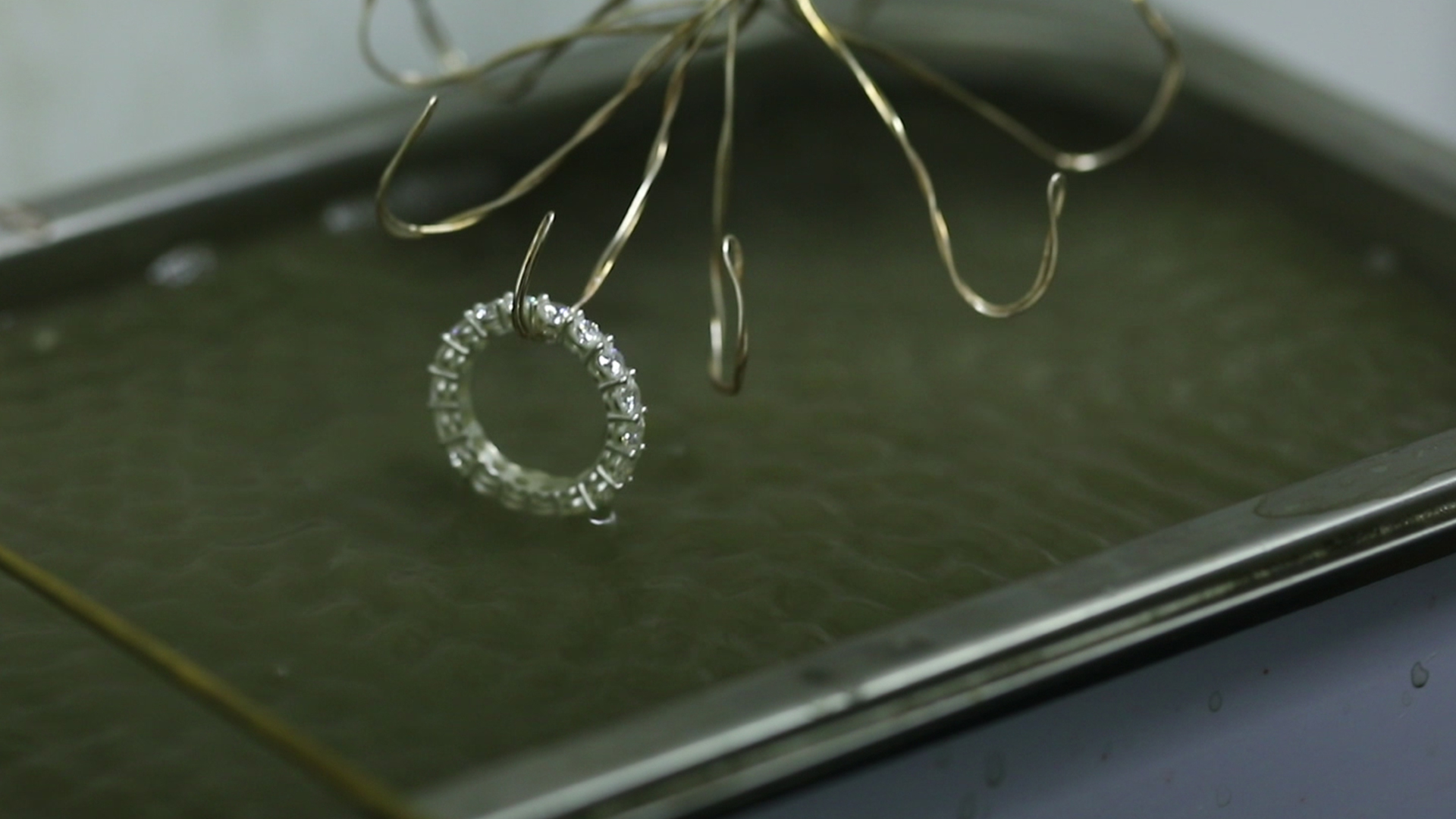
For white, yellow and rose-colored finishes, surface treatment directly affects the final appearance. A purchase specification should clearly define:
- base metal
- target metal color
- plating or finish requirements
- any project-specific surface treatment
Buyers should also avoid confusing: Solid Gold, Gold Plated and Gold Filled. These are different material descriptions and should not be used interchangeably.
7.1 Why Is Color Consistency More Important in Bulk Orders?
A slight color difference may be difficult to notice when viewing one piece alone. It becomes much easier to see when 10, 50 or 100 pieces are displayed together.
For that reason, bulk QC should consider: Batch Consistency not only the appearance of one individual piece.
8. Stone, Metal and Documentation Must Match the Purchase Specification
Visual inspection is only part of jewelry QC. The buyer should also confirm that the product is what was actually ordered.
Questions may include:
- Is the stone moissanite or a lab-grown diamond?
- Is the center-stone size correct?
- Is the shape correct?
- Is the metal S925, 10K, 14K or 18K gold?
- Is the ring size correct?
If the order requires a certificate or third-party laboratory report, also confirm:
- what product the report covers
- whether the report number matches
- whether it applies to a loose stone or finished jewelry
- whether it was included in the agreed service
Do not assume every jewelry product automatically includes the same type of certificate. Documentation requirements should be confirmed during quotation and order approval.
9. What Does MOSUP Check During Final QC?
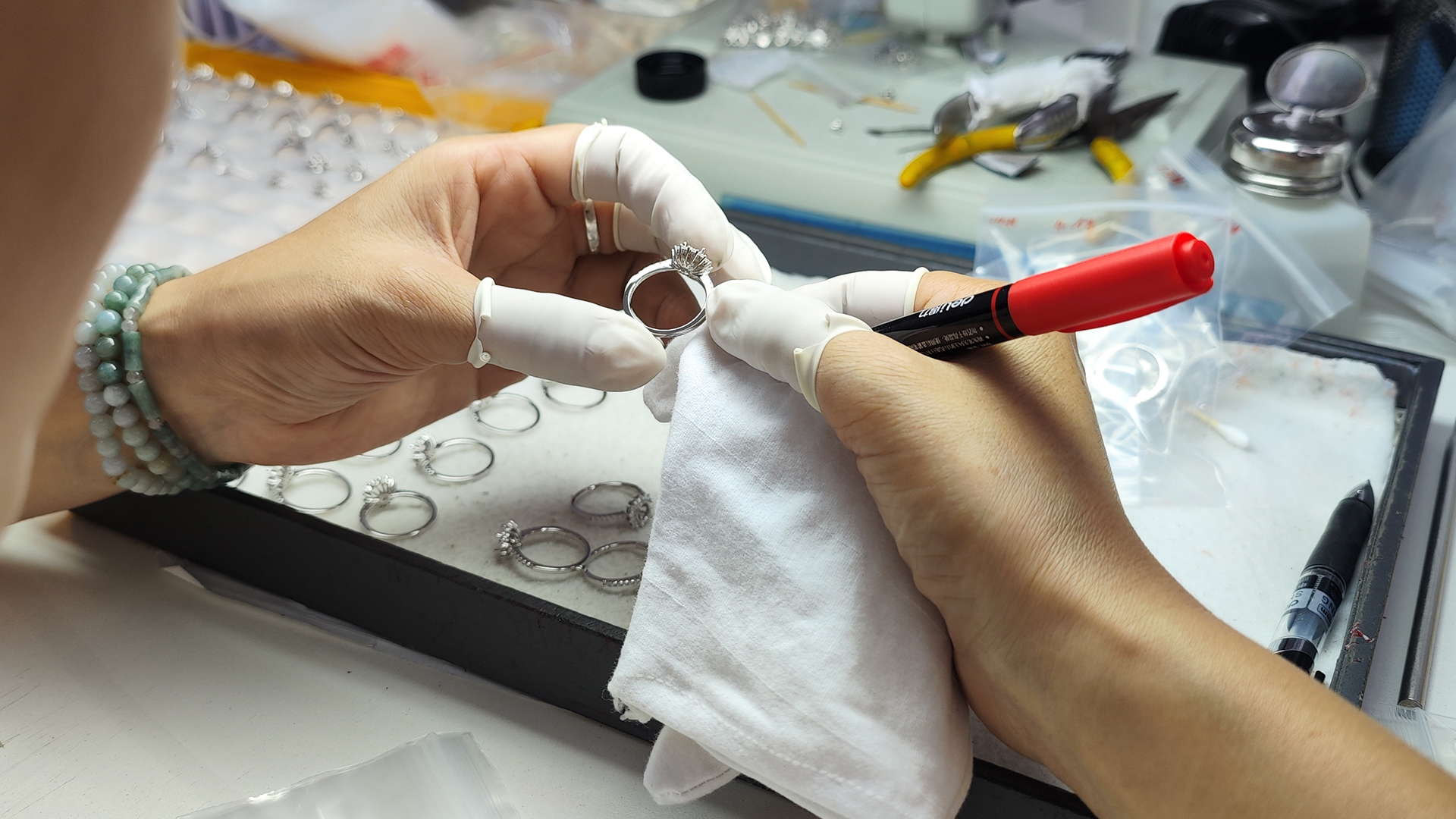
Once manufacturing is complete, the finished jewelry moves into final inspection. Exact inspection points vary by product, but common checks may include:
- center-stone dimensions and appearance
- stone color and cut appearance where relevant
- stone security
- prong condition
- loose stones
- ring size
- chain length and clasp function
- polishing
- plating
- metal surfaces
- logo or engraving placement
- packaging
- metal and stone weights where applicable
For OEM and ODM projects, buyers can also define project-specific acceptance requirements before production. The useful question is not simply: “Did it pass QC?”
It is: “What was actually checked?” That distinction matters when comparing suppliers.
10. Final QC Does Not End Until Packing and Shipment Are Checked
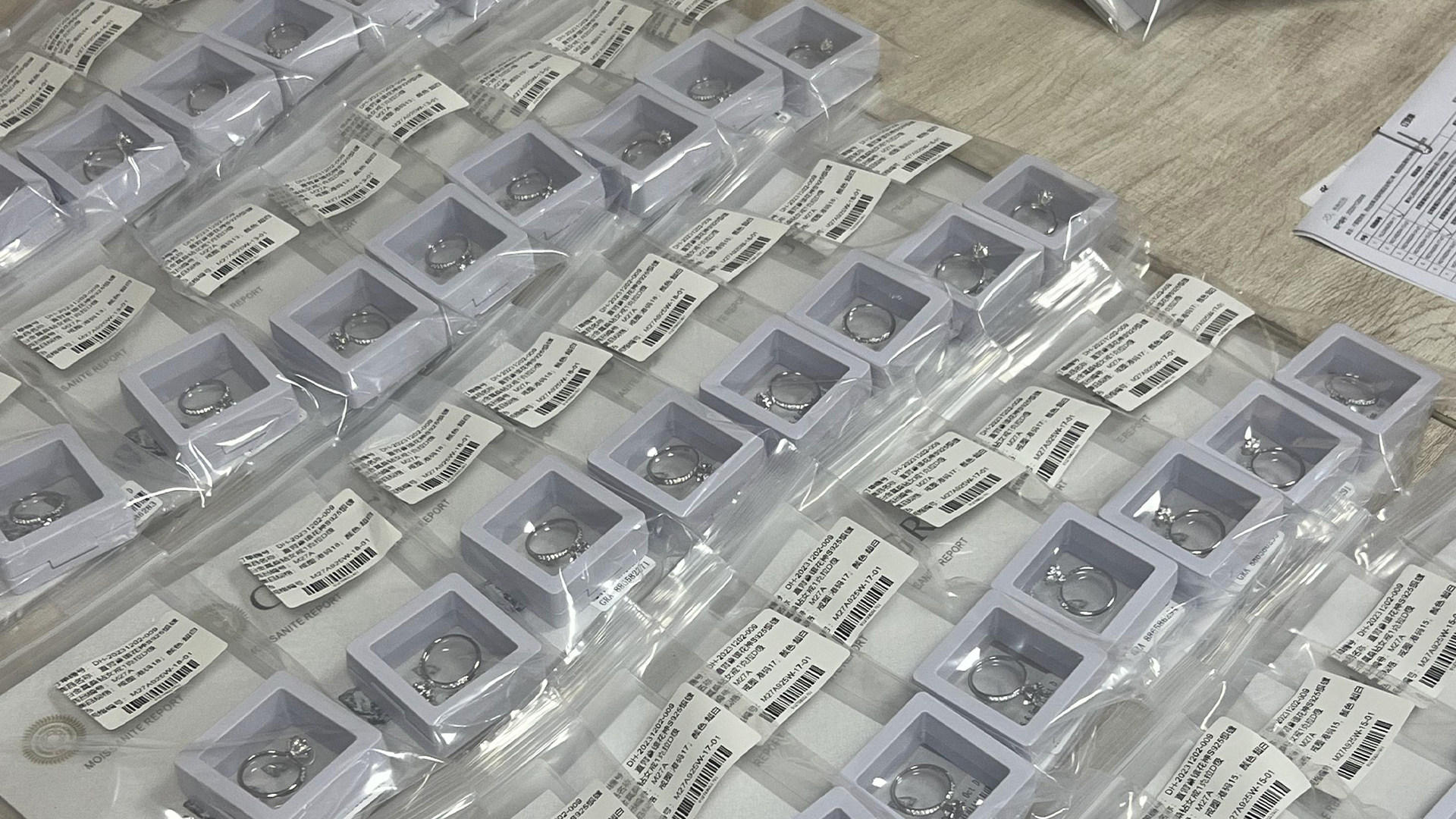
A finished piece can pass jewelry inspection and still create problems if the packing stage is incorrect. Examples include:
- wrong SKU labels
- incorrect ring-size labels
- certificate mismatches
- incorrect jewelry boxes
- quantity errors
- insufficient shipping protection
Private-label orders add another layer of inspection. The team may also need to confirm:
- correct logo
- correct packaging version
- correct brand information
- correct SKU presentation
The final shipment check should therefore treat: Product + Documentation + Packaging + SKU + Quantity as one complete order.
11. Wholesale Jewelry QC Checklist
Before approving a bulk shipment, buyers should confirm at least the following:
- Product SpecificationConfirm that the SKU, design revision and approved sample match.
- MetalVerify the agreed S925, 10K, 14K, 18K or other specified metal.
- StoneConfirm gemstone type, shape, dimensions and quantity.
- SettingCheck that center and accent stones are secure.
- DimensionsConfirm ring size, chain length and other critical measurements.
- Surface FinishInspect grinding, polishing, scratches and visible surface quality.
- Plating / ColorCheck finish and color consistency within the batch.
- BrandingConfirm laser engraving, text and private-label details.
- Certificate / DocumentationVerify any reports or documents required by the purchase order.
- Packaging & QuantityCheck packaging, SKU identification, quantity and shipping protection.
For repeat products, buyers should also keep an: Approved Sample / Golden Sample as a reference for future production.
12. Why Jewelry Quality Control Directly Affects Brand Profitability
QC may look like a manufacturing responsibility. In practice, it is also a cost-management issue. Suppose a finished piece has a relatively low factory cost but reaches the customer with a loose stone.
The brand may then face: remaking the product, international shipping, refunds, customer-service time, repair costs, replacement costs, and potentially a negative review.
That is why professional buyers should not compare suppliers only by: Unit Price.
They should also consider: Defect Risk + After-Sales Cost + Reorder Consistency
A supply chain with slightly higher production cost but better process control may ultimately create a lower total operating cost.
FAQ: Jewelry Quality Control
1. Does MOSUP Inspect Jewelry Before Shipment?
Yes. MOSUP uses quality inspection as part of its order and production workflow. Exact inspection items depend on the product and project specifications.
For custom projects, additional QC requirements can be confirmed before production.
2. Will Bulk Production Be Exactly Identical to the Approved Sample?
No responsible manufacturing process should promise absolute zero variation.
The professional approach is to establish clear specifications, an approved reference sample and acceptance standards so that production variation stays within the agreed range.
3. Can I Order a Sample Before a Bulk Jewelry Order?
Yes. MOSUP provides Sample Order Service with no minimum order quantity.
A buyer can begin with one sample or order several samples depending on the project, product-testing requirements or internal review needs.
For custom samples, any CAD, special stone, logo, packaging or laboratory-report costs should still be confirmed in the quotation.
4. Does Every Piece Automatically Include a Certificate?
No. Certificate and third-party laboratory-report requirements depend on the gemstone, SKU and customer request.
If an IGI or another report is required, confirm the report type, tested item, cost and whether it applies to the loose stone or finished jewelry before ordering.
How Can a Buyer Evaluate a Supplier's QC Capability?
Do not stop at asking: “Do you have QC?” Ask:
- What is inspected?
- At which production stage?
- What reference standard is used?
- How are defects handled?
- How is batch consistency checked?
- What happens when a product does not meet the agreed specification?
Those answers are more useful than a general claim such as: “Quality Guaranteed.”
Good Jewelry Quality Is Built Step by Step
From CAD to shipment, jewelry passes through multiple production stages. Consistent quality is built through: Clear Specifications + Process Control + Sample Approval + In-Process Inspection + Final QC + Production Records
MOSUP supports jewelry brands, retailers and wholesale buyers with moissanite, lab-grown diamond and lab-grown gemstone products, along with S925 sterling silver, 10K, 14K and 18K gold options for relevant projects.
Depending on the project, services may also include: OEM / ODM development, custom design, CAD, Sample Orders with No MOQ, logo laser engraving, private-label packaging, and quality-control support.
For a new product, buyers can validate the design with a sample before making a larger production decision. For proven products, the focus shifts toward consistency, replenishment and repeatable production standards.
Whether the next order is 10 pieces or 500 pieces, the long-term objective remains the same: the approved product standard should be reproducible when the brand orders again.
Ready to Review Your Next Jewelry Project?
Send MOSUP: product link / design / reference image + gemstone + metal + sample or production quantity + target market + logo / packaging requirements + expected delivery date
If you want to evaluate the product first, you can also begin with a No-MOQ Sample Order.
For custom projects, the next steps may include: Sample → Specification Approval → Production → QC → Shipment
→ Explore the MOSUP Jewelry Catalog
→ Read How to Choose a Moissanite Jewelry Manufacturer
→ Read How to Start a Jewelry Business
→ Contact MOSUP for a Project-Specific Review


