
Cubic zirconia (CZ) and moissanite are two popular high-luster diamond alternatives widely used in the jewelry market, often chosen for their budget-friendly pricing. However, they differ significantly in chemical composition, physical properties, durability, and optical performance. This guide breaks down the differences between cubic zirconia and moissanite across professional specifications, visual performance, wear scenarios, and identification methods to help you make an informed purchasing decision.
1 Basic Definitions & Fundamental Properties
1.1 What Is Cubic Zirconia
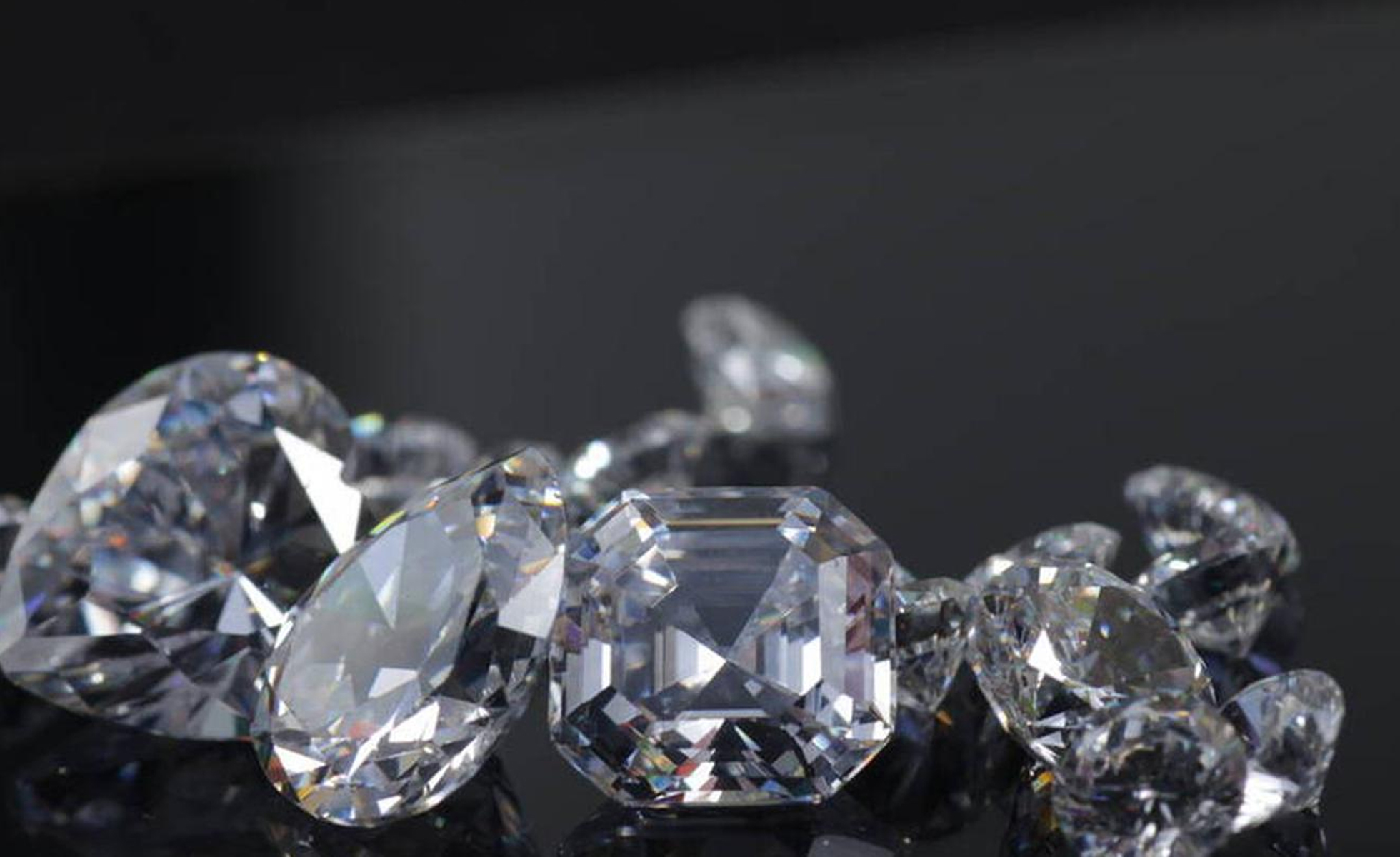
Cubic zirconia (CZ) is a lab-created crystalline material with the chemical formula ZrO₂ (zirconium dioxide). It is a synthetic diamond simulant, not a natural gemstone, and has been the most widely used affordable diamond substitute in fashion and fine jewelry for decades.
It features high refractive index and bright luster, and can be manufactured in consistent clarity and various colors. Note that natural zircon (a natural silicate mineral) is chemically distinct from cubic zirconia; the casual term "zircon" in mass retail often incorrectly refers to cubic zirconia.
1.2 What Is Moissanite
Moissanite is composed of silicon carbide (SiC). Natural moissanite is extremely rare, found only in meteorite craters, so nearly all moissanite used in jewelry today is lab-created.
With optical and physical properties very close to diamond, moissanite is the most diamond-like gemstone available. It also exhibits stronger fire (colorful light dispersion) than natural diamond, making it increasingly popular in fine jewelry and engagement ring categories.
2 Core Physical Parameter Comparison
2.1 Parameter Comparison Table
Hardness, refractive index, and dispersion directly determine a gemstone’s wear lifespan, luster, and value. The table below compares core specifications of the two materials:
| Performance Indicator | Cubic Zirconia (CZ) | Moissanite |
|---|---|---|
| Mohs Hardness | 8.0–8.5 | 9.25 |
| Refractive Index | 2.15–2.18 | 2.65–2.69 |
| Dispersion (Fire) | 0.060 | 0.104 |
| Density (g/cm³) | 5.6–6.0 | 3.22 |
| Chemical Composition | Zirconium dioxide (ZrO₂) | Silicon carbide (SiC) |
Source: General gemological testing standards
2.2 Practical Impact on Daily Wear
- Mohs Hardness: A higher value means better scratch resistance. Moissanite is significantly more durable than cubic zirconia for long-term daily wear.
- Refractive Index: A higher value creates brighter brilliance. Moissanite delivers higher visual brightness than cubic zirconia.
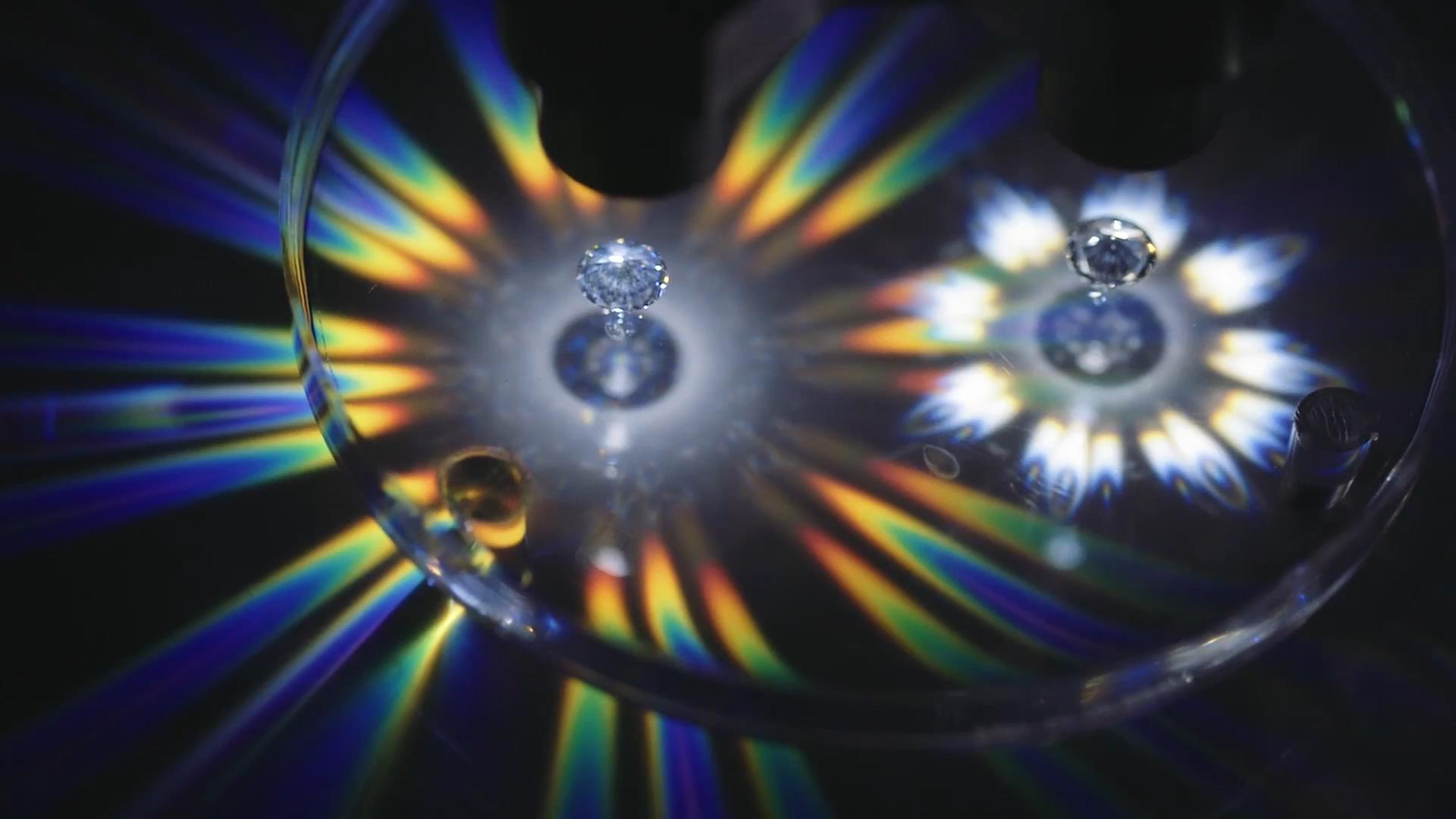
- Dispersion (Fire): A higher value produces richer rainbow-colored flashes. Moissanite has far stronger fire performance than cubic zirconia.
- Density: A higher value means heavier hand feel for the same size. Cubic zirconia feels noticeably heavier and denser than moissanite.
3 Differences in Appearance & Wear Experience
3.1 Visual Luster & Fire Performance
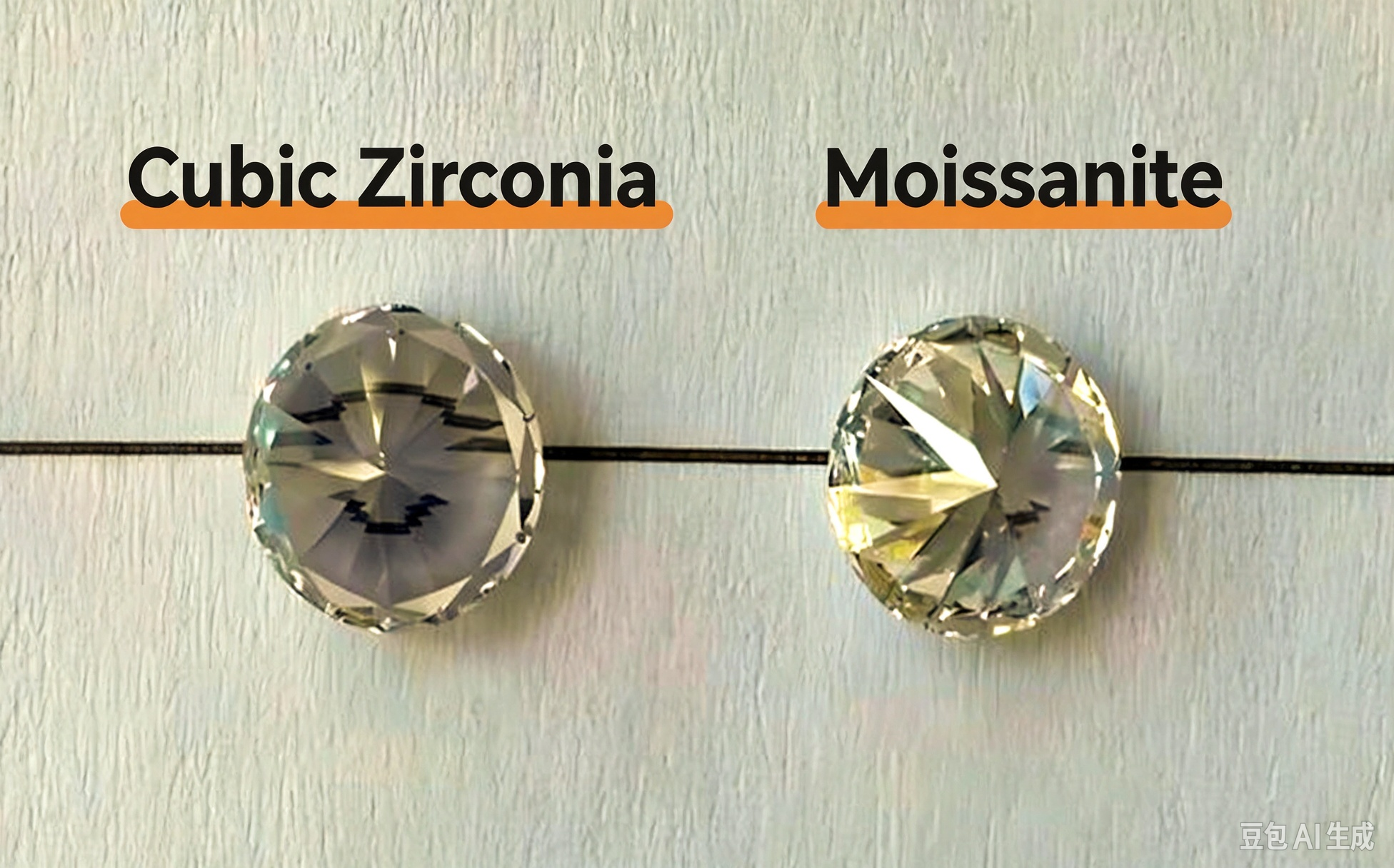
- Cubic Zirconia: Has a bright but slightly glassy luster with moderate dispersion. Its fire appears softer and less vivid, and may look overly white or flat under indoor lighting compared to moissanite.
- Moissanite: Delivers far higher brilliance and fire than cubic zirconia. Under light, it shows rich, sharp rainbow-colored flashes, creating a more diamond-like sparkling effect.
3.2 Optical Feature Differences
- Cubic zirconia is isotropic (single refractive), so it produces no double-image effect under magnification; this is a key gemological marker to distinguish it from moissanite.
- Moissanite has an iconic birefringence feature. When viewed through the table facet at an angle with a 10x loupe, clear doubling of pavilion facet lines is visible — this is one of the core indicators to tell moissanite apart from diamond and cubic zirconia.
3.3 Durability for Daily Wear
- Cubic Zirconia: Its moderate hardness makes it prone to fine scratches and abrasion over years of daily wear. The surface may gradually become hazy and lose luster, especially on ring pieces that experience frequent friction. It is well suited for earrings, pendants and occasional-wear jewelry.
- Moissanite: Second only to diamond in hardness, it resists scratches and minor impacts from daily use. Its polished surface stays brilliant for a long time, making it ideal for high-frequency pieces like engagement rings and everyday jewelry.
4 Market Price & Application Scenarios
4.1 Price Range Comparison
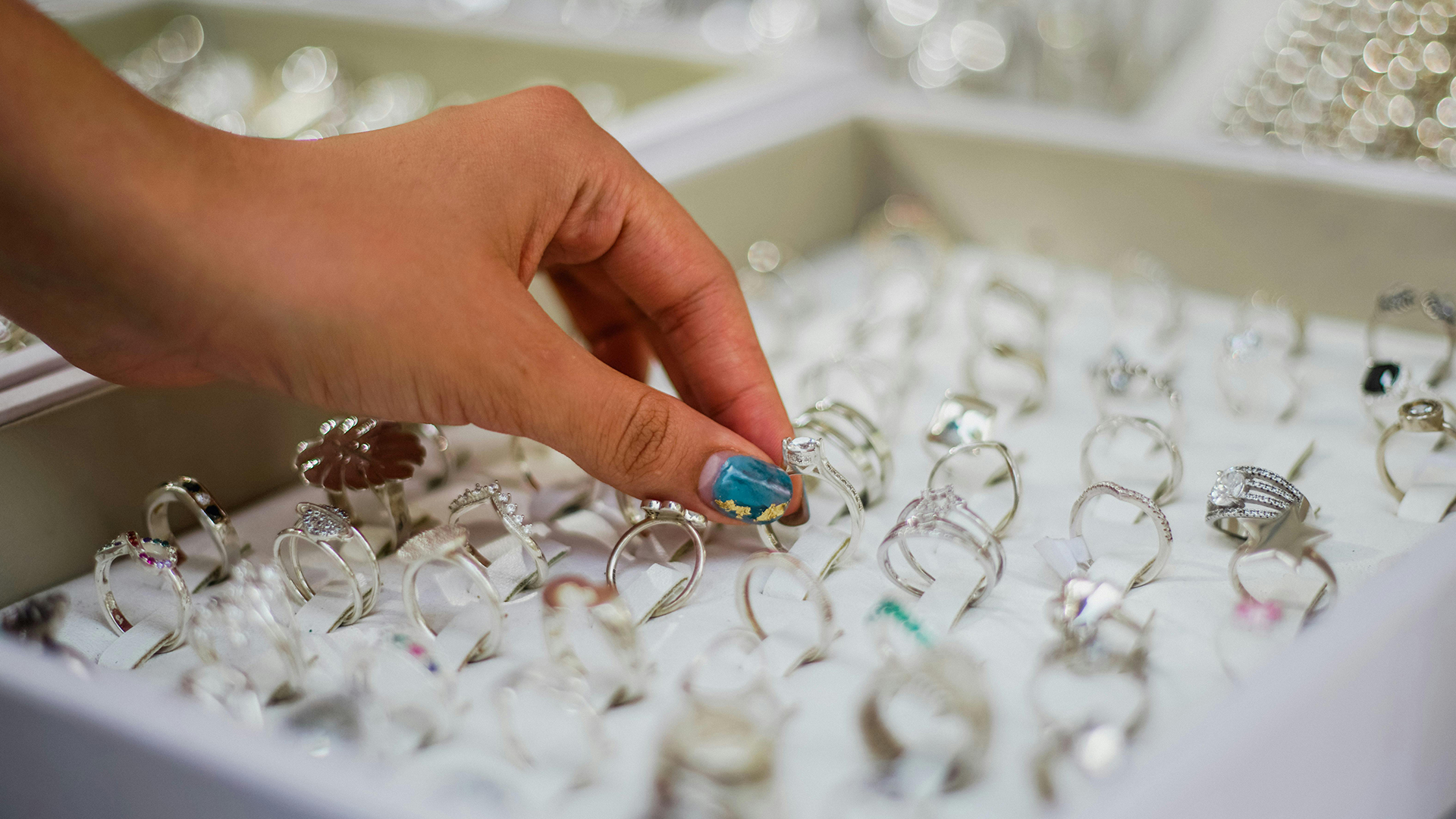
For the same carat size, moissanite is generally more expensive than cubic zirconia, but both are far more affordable than natural diamond:
- Cubic Zirconia: 1-carat high-grade CZ falls into the budget fashion jewelry price range, making it a low-cost option for disposable or seasonal accessories.
- Moissanite: A 1-carat D-color VVS-grade moissanite costs roughly 1/10 the price of a natural diamond, positioning it as an affordable luxury fine jewelry option.
4.2 Scenario-Based Buying Recommendations
- Cubic Zirconia: Suitable for budget fashion accessories, seasonal decorative jewelry and trend pieces, ideal for buyers on a tight budget who replace styles frequently.
- Moissanite: Suitable for daily fine jewelry, engagement rings and commemorative pieces, ideal for buyers seeking long-term wear quality and high cost performance.
5 Practical Identification Methods
5.1 Visual Observation
Rotate the stone under natural light. The one with intense, sharp rainbow fire is moissanite; the one with softer, whiter brilliance and weaker color flashes is cubic zirconia.
5.2 Loupe Inspection
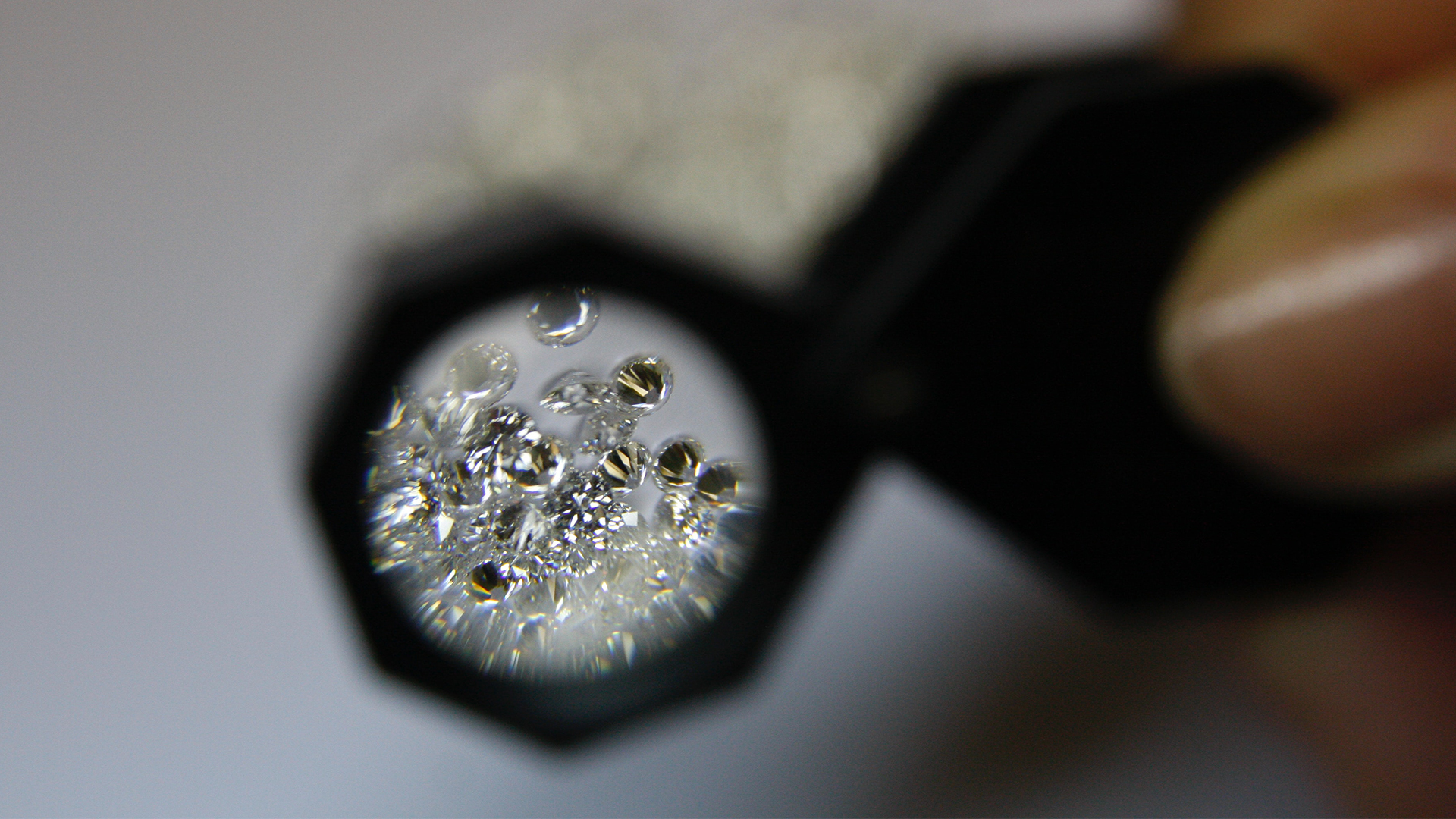
View the pavilion facet edges with a 10x loupe. Moissanite shows clear, regular facet edge doubling; cubic zirconia shows no double image, as it is single-refractive.
5.3 Weight & Hand-Feel Test
For two loose stones of the same size, the noticeably heavier, denser one is cubic zirconia; the lighter one with a hand feel close to diamond is moissanite.
6 Frequently Asked Questions (FAQ)
6.1 Is cubic zirconia the same as moissanite?
No. They are completely different materials with distinct chemical compositions and physical properties. Cubic zirconia is synthetic zirconium dioxide, while moissanite is lab-grown silicon carbide crystal.
6.2 Which is more similar to diamond, moissanite or cubic zirconia?
Moissanite is much more similar to diamond. It matches diamond more closely in hardness, luster and weight, and even outperforms diamond in fire. Cubic zirconia differs more noticeably in density, hardness and long-term wear performance.
6.3 Which is better for a daily-wear ring, cubic zirconia or moissanite?
Moissanite is the better choice. Rings experience high friction in daily wear. Moissanite’s high hardness keeps it brilliant and scratch-resistant long-term. Cubic zirconia rings scratch and haze more easily with regular wear and require more frequent replacement or re-polishing.
7 Conclusion
Both cubic zirconia and moissanite have their own advantages: cubic zirconia, as an ultra-affordable synthetic diamond simulant, works well for decorative and trend-driven accessories; moissanite, with diamond-like quality and excellent durability, is a cost-effective option for daily fine jewelry and engagement pieces.
Choose based on your wear frequency, budget and desired finish. Always purchase from reputable sellers that clearly label materials and grade specifications to avoid material misrepresentation.


