
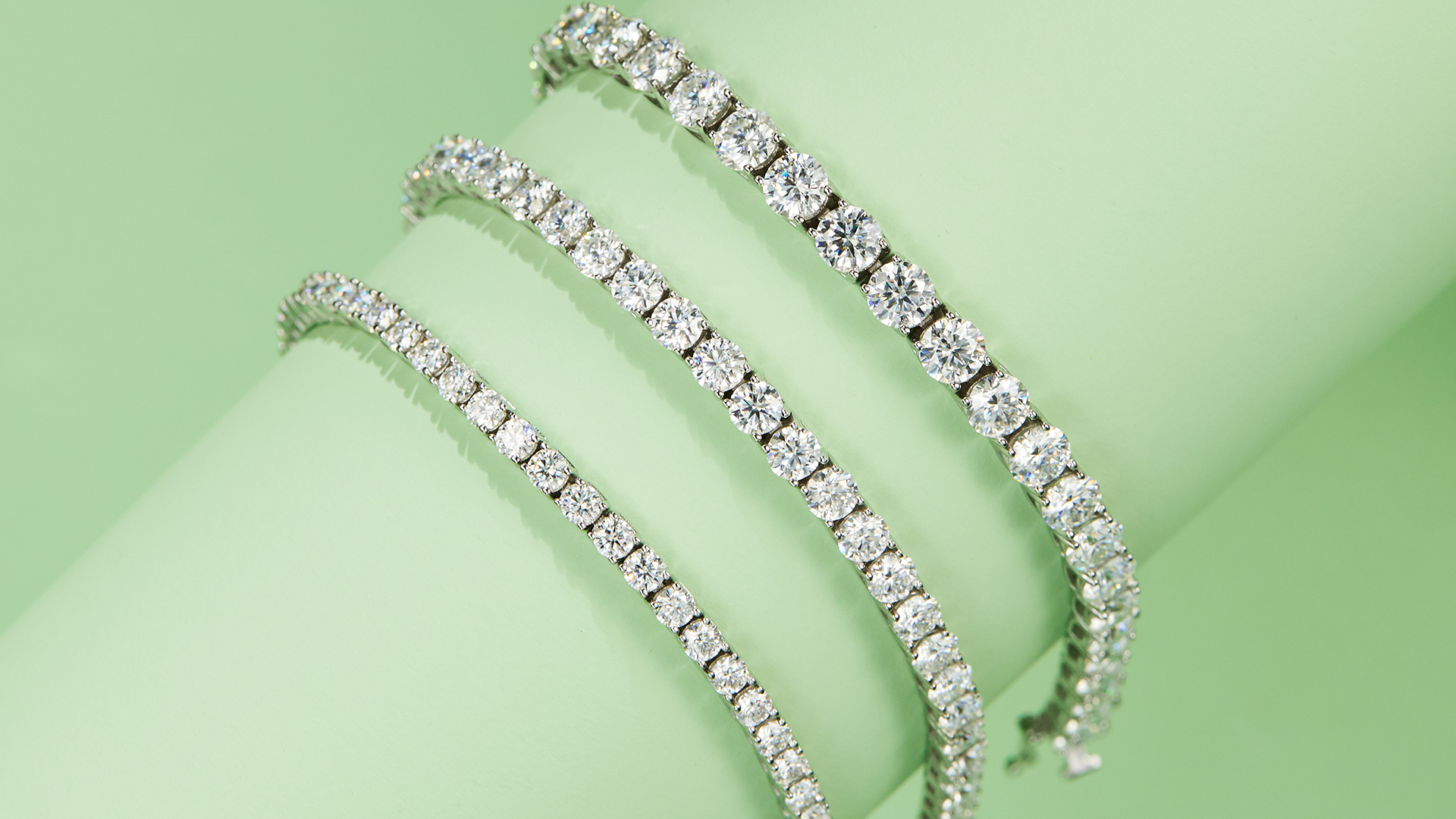
Tennis jewelry depends on repetition: many stone settings, many flexible connections and a clasp that secures the entire line. That graceful movement is also why care must go beyond wiping the stones. A Moissanite Tennis Necklace needs routine checks for twist, articulation and closure before it is placed around the neck.
A Moissanite Tennis Bracelet faces more contact with desks, sleeves and other wristwear, but the same principle applies: protect the components that let the piece flex while keeping each stone aligned.
Why flexible construction needs a different routine
A rigid pendant has a few main connection points. A tennis line may have dozens. Each link must move enough to follow the body without twisting the stone settings or opening a gap. The clasp and any safety mechanism then carry the risk of losing the entire piece.
Care is therefore a sequence of small observations. No single check takes long, but together they reveal a loose setting, stiff link or tired closure before it becomes a failure.
Lay the piece flat before putting it on
Place the jewelry on a clean, soft, light-colored surface. The stones should form an even line and the links should settle without forced bends. A necklace should curve smoothly; a bracelet should form a relaxed arc. A section that stays flipped or stands away from the surface deserves closer inspection.
Look along both edges for inconsistent gaps, raised prongs or a stone that sits at a different angle. Move the line gently one link at a time. Stop if a link feels locked, unusually loose or rough. Do not repeatedly flex a questionable section to test it.
Test the clasp and safety before every wear
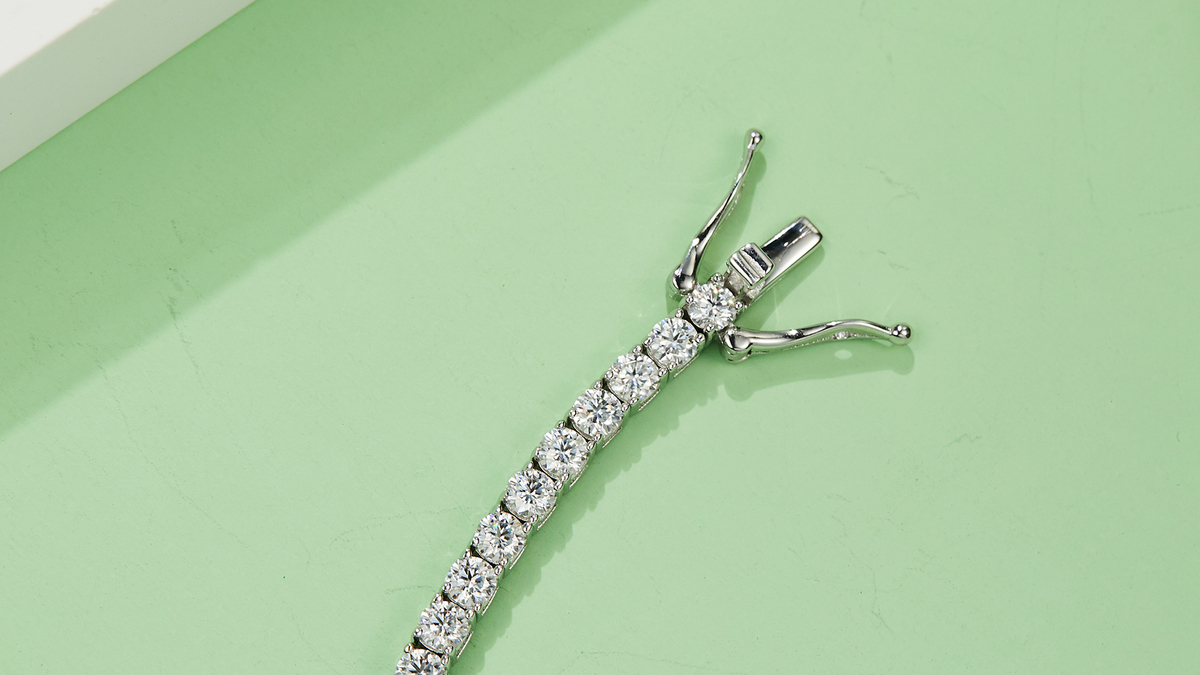
Open and close the clasp over the soft surface. It should align naturally and engage with a clear, consistent action. If the design includes a safety latch or side lock, test that separately. A clasp that needs twisting or unusual force may be misaligned.
Never rely on a safety component to compensate for a main clasp that does not hold. If the closure opens under light normal handling, stop wearing the piece. Adjustment or replacement is less costly than losing the entire stone line.
Clean while supporting the links
Use a shallow bowl of lukewarm water with a small amount of mild dish soap when the metal, plating and any additional materials allow it. Support a short section in your hand and use a very soft brush around the sides and underside of the settings. Work gradually instead of scrubbing the whole line against the bottom of the bowl.
Rinse in a second bowl, blot with a lint-free cloth and lay the piece flat to dry completely. Do not pull it through a cloth; prongs and links can catch. Avoid home steam or ultrasonic cleaning unless the seller or a qualified jeweler confirms that the complete construction is suitable, not just the gemstone.
Necklace-specific checks: drape, twist and hair contact
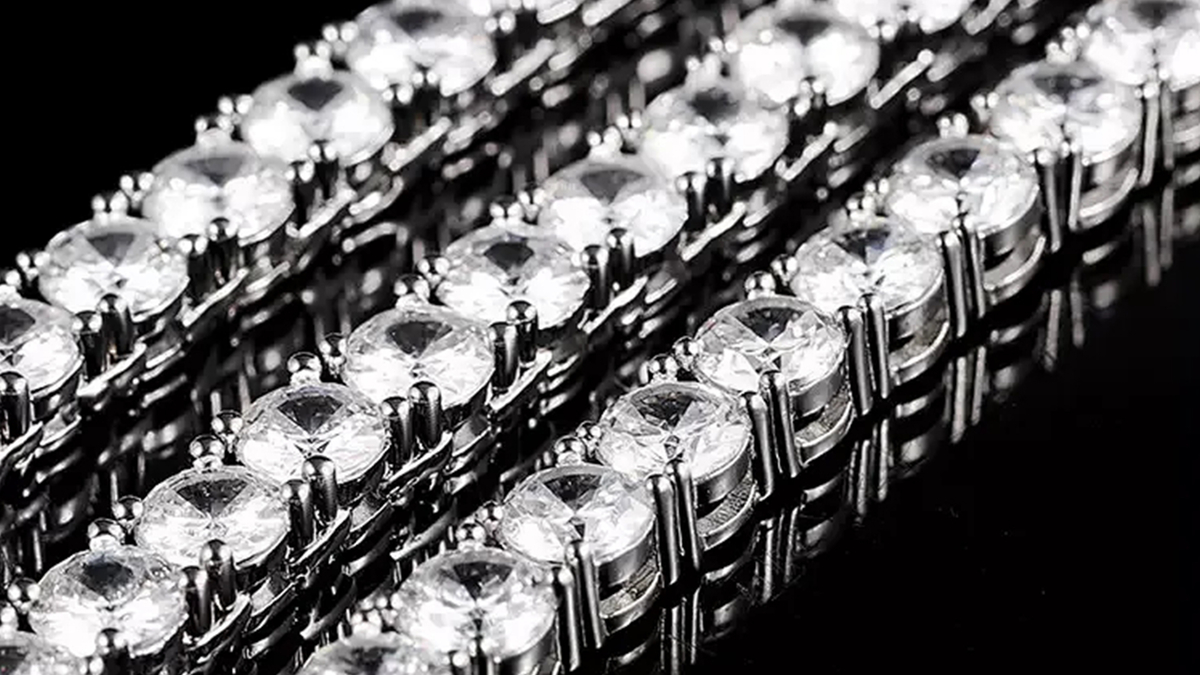
Before closing a Moissanite Tennis Necklace, make sure the line is not twisted. Fasten it with the stone faces oriented outward, then check that the clasp sits at the back without pulling one side higher. Hair can catch around prongs and the clasp, so put the necklace on after styling and remove it before changing tight-neck clothing.
Store the necklace flat or in a broad natural curve. Hanging a heavier piece from a small hook concentrates weight at one point. Folding it sharply can force the settings against one another and make the next wear more likely to twist.
Moissanite Tennis Bracelet care for high-contact wear
Choose a length that allows movement without sliding over the hand or colliding constantly with a watch. On the dominant wrist, desks and tools create more contact. If stacking, place hard-edged pieces where they will not press directly on prongs or the clasp.
After wear, inspect the underside for residue and check the section nearest the clasp, where handling is concentrated. A bracelet that suddenly drapes differently, catches sleeves or shows a recurring flipped link should be examined before the next use.
Use three levels of maintenance
A simple schedule keeps the routine realistic and avoids unnecessary aggressive cleaning.
· Before each wear: alignment, link movement, stone security, clasp and safety check
· After visible buildup: supported mild-soap cleaning and complete flat drying
· After impact, snag or change in movement: stop wear and arrange professional inspection
Know the stop-wear signs
Do not wear the piece if a stone moves, a prong catches, a link opens, a setting stays flipped, the clasp misaligns or the safety no longer closes. These are structural symptoms. More cleaning or repeated flexing will not solve them.
The MOSUP tennis collection should remain the commercial destination for comparing available styles. This care article can link to it after answering the maintenance question, while the separate bracelet-construction article explains what buyers should inspect before purchase.
Frequently Asked Questions
Can tennis jewelry be worn every day?
It can be worn frequently when the length, setting and closure suit the wearer's routine. High-contact use increases the need for quick link, stone and clasp checks.
Should a tennis necklace be stored hanging?
Flat storage or a broad natural curve usually avoids concentrated weight and sharp folds. Follow any storage instructions supplied with the specific piece.
How loose should a Moissanite Tennis Bracelet be?
It should move without sliding over the hand or striking nearby jewelry constantly. Measure the wrist and compare the listed length rather than relying on a generic size label.
What causes a tennis line to flip?
Length, center of gravity, link stiffness, twisted placement and setting geometry can all contribute. A new persistent flip or stiff section should be inspected rather than forced.