
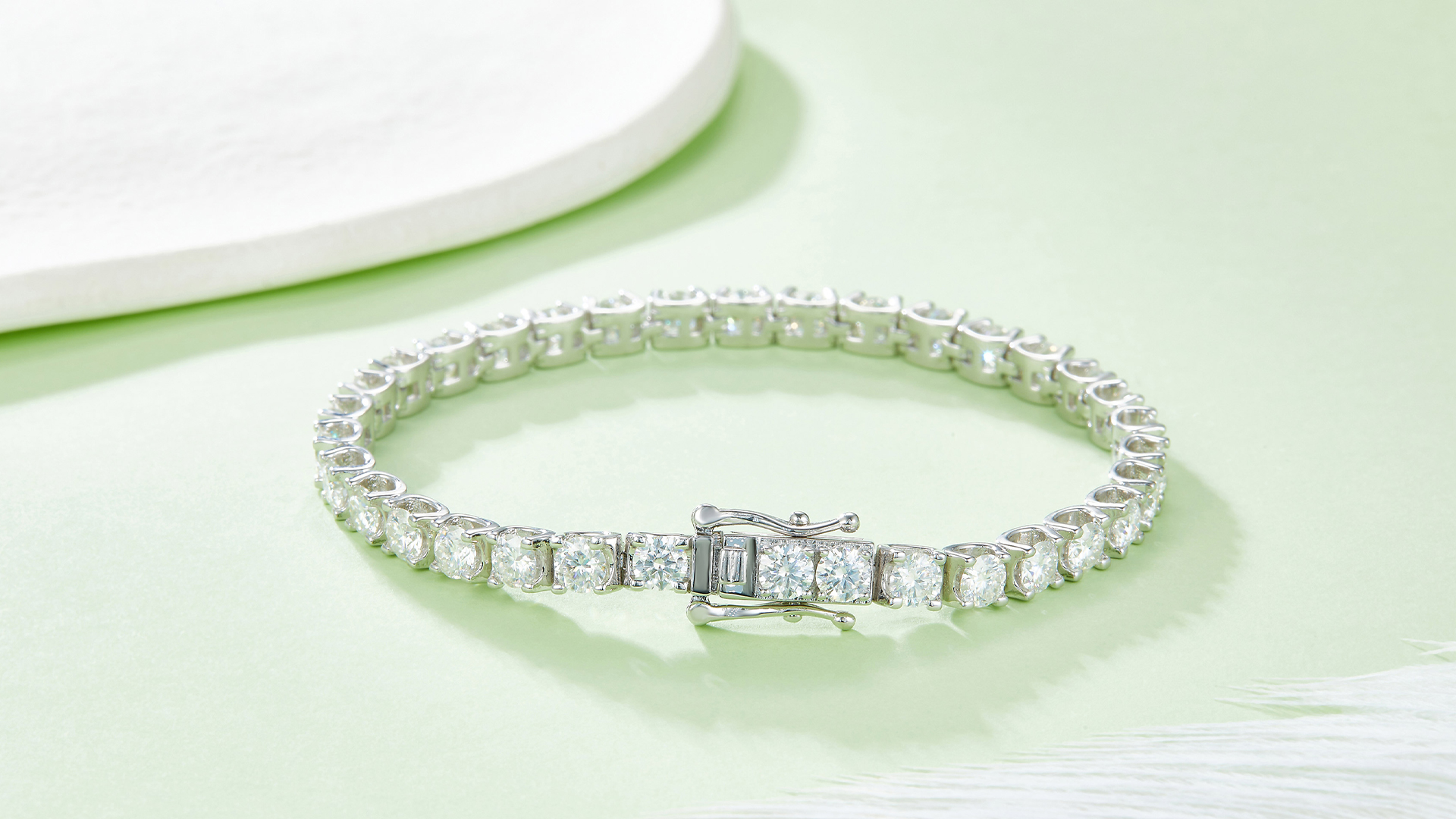
A bracelet must bend around the wrist, survive repeated closure and stay comfortable against skin. Its front view may be dominated by stones, but durability depends on hidden geometry: link clearances, stone seats, wall thickness, joints, underside finishing and the clasp.
Evaluating a Moissanite Bracelet therefore requires more than counting stones or comparing total weight.
This guide explains the construction signals a shopper or retail buyer can inspect without damaging the piece. It also shows which questions belong on product pages so buyers can compare designs on equal terms.
Begin with the bracelet's structural type
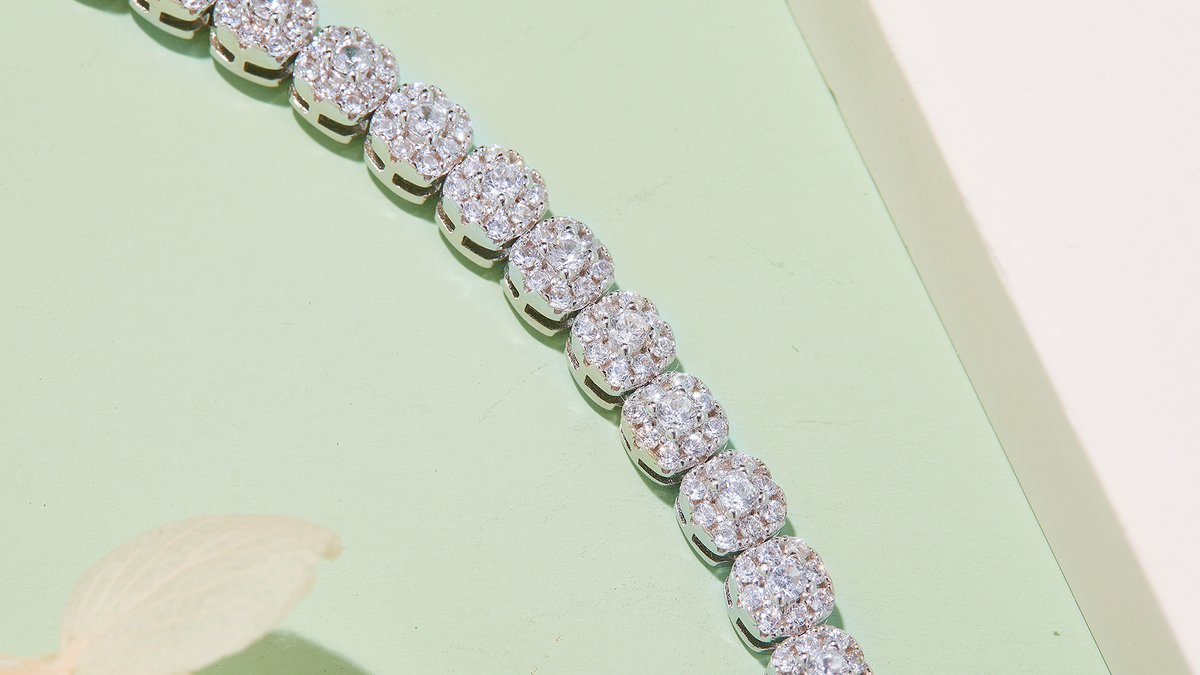
A tennis line uses many articulated settings. A link bracelet may alternate decorative and structural components. A bangle relies on a rigid or lightly flexible circle, sometimes with a hinge. A cuff stays open and depends on controlled spring or fixed shape.
Each type carries load differently.
Quality checks should follow that structure. Do not expect a rigid bangle to drape like a tennis line, and do not force a cuff repeatedly to test flexibility. Product copy should name the construction type and explain the closure or opening method.
Links need controlled movement, not maximum looseness
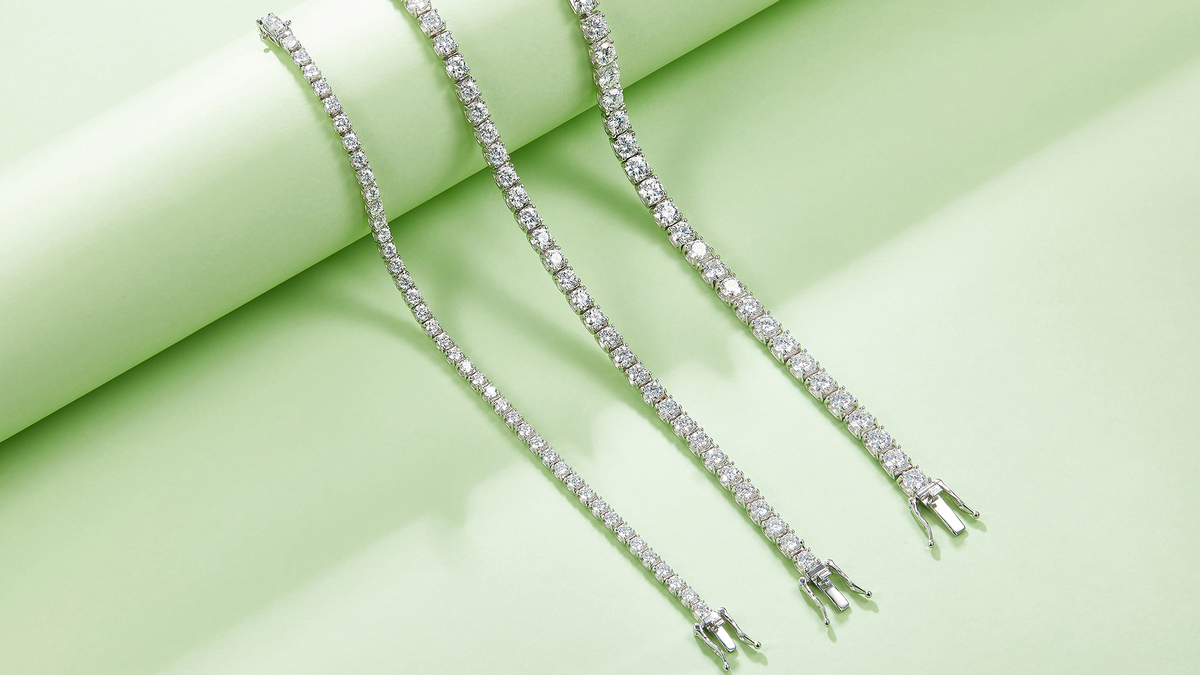
Articulated links should move enough to follow the wrist while keeping stone faces aligned. Excessive side play can make a line look uneven; tight links can cause flipping or concentrate stress. Gaps should be consistent and free of sharp burrs.
Lay the bracelet on a soft surface and form a relaxed curve. It should move through the curve without one section locking or collapsing. Listen for an unusual click and watch for a link that sits above the others. These observations are useful;
forceful bending is not.
Stone seats matter before prongs are finished
A prong does not hold a stone effectively if the seat is uneven. From the side, the stone should sit level and at a consistent height relative to its neighbors. Prongs should meet the outline evenly and should not appear split, lifted or much thinner than adjacent prongs.
In multi-stone rows, compare the entire sequence. Consistent table orientation, gaps and prong position make the line look continuous. If one stone tilts, more polishing will not correct the underlying seat.
Metal distribution is more informative than a thin-looking photo
A delicate design can be well engineered, and a heavy-looking design can hide weak junctions. Photographs alone rarely reveal wall thickness or metal weight. Ask for overall weight, dimensions and clear side and underside views where available.
Pay attention to transitions: link pins, hinge knuckles, prong bases and the area where the clasp joins the bracelet. These points carry repeated movement. They should look proportionate and symmetrical rather than abruptly thinned.
A clasp is a system, not a single click
Box, lobster, fold-over and other clasps use different mechanisms. The useful test is consistent alignment and positive engagement. A closure should not require twisting the bracelet to make the parts meet, and it should not open under light normal handling.
Safety latches or side locks add redundancy but do not repair a weak main clasp. Check how the clasp connects to the last links and whether the underside is smooth. On heavier designs, the closure should feel proportionate to the load it carries.
Underside finishing determines comfort
The wrist feels the back of the bracelet continuously. Rough casting, sharp link corners, exposed solder and unfinished prong bases can irritate skin or catch fabric. A polished underside does not need to be decorative, but it should be deliberate.
Run a fingertip lightly along accessible edges. Check the hinge and clasp from below. A smooth finish also makes cleaning easier because residue has fewer rough recesses in which to collect.
Length changes both comfort and impact
A bracelet that is too tight restricts articulation and concentrates pressure. One that is too loose can rotate, strike surfaces and slide over the hand. Compare wrist circumference with the finished internal length and allow the ease recommended for the specific structure.
Wide or rigid styles often need different ease from narrow flexible ones. State whether the listed length includes the clasp and whether removable or adjustable links are available. These details help buyers choose correctly without relying on a one-size label.
A safe pre-purchase and receiving checklist
If anything moves unexpectedly, stop the check and arrange professional assessment. A receiving inspection should document condition, not stress-test the piece.
1. Confirm bracelet type, finished length, width, weight and closure.
2. View the front, side and underside at consistent scale.
3. Check link gaps, stone height and prong alignment across the full row.
4. Open and close the clasp over a soft surface several normal times.
5. Form a gentle curve and identify any stiff, loose or raised section.
6. Inspect skin-contact surfaces for sharp edges or rough joints.
Separate construction content from care content
This page should answer what makes a well-built Moissanite Bracelet before purchase. The companion tennis-jewelry article covers cleaning, storage and ongoing inspection after purchase. Cross-link the two, but keep their H1s, metadata and lead questions distinct.
Finish with a descriptive link to the MOSUP bracelet collection. The collection owns commercial browsing, while this article supports it with a construction vocabulary shoppers can use when comparing products.
Frequently Asked Questions
How can I tell whether bracelet links are too loose?
Compare the gaps and side movement across the entire piece. One section that collapses, lifts or moves much more than its neighbors may need inspection.
Is a safety clasp necessary?
It adds redundancy on some designs, but clasp quality still depends on the main mechanism, alignment and connection to the bracelet. A safety should not compensate for a main closure that fails.
Does more metal always mean a better bracelet?
No. Distribution, joint design, setting accuracy and finish matter. Weight and dimensions are useful comparison fields, but they must be interpreted with the structure.
What should a Moissanite Bracelet product page show?
Look for finished length, width, weight, closure type, metal, surface finish and clear front, side and underside images. Flexible styles also benefit from a drape or movement view.