
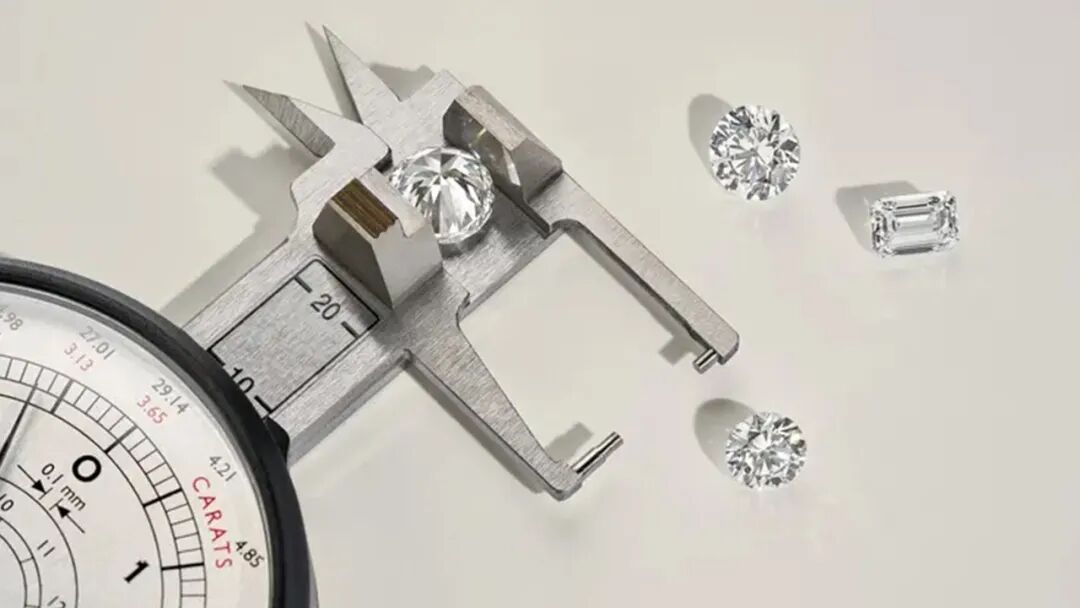
The Optical Science Behind a Well-Cut Moissanite
Moissanite and diamond can look remarkably similar at first glance, which often leads to a common assumption: if a diamond looks beautiful with a particular cutting style, the same proportions should automatically produce the same result in moissanite.
That assumption is not entirely correct.
A gemstone's cut is not simply a geometric shape. It is an optical design created around the physical and optical properties of the material. Refractive index,
dispersion, birefringence, facet geometry, and the relationship between crown and pavilion all influence how light behaves inside a gemstone.
Moissanite can be cut in familiar styles such as the round brilliant, oval, pear, emerald, and cushion cuts. However, the fact that the cutting style is the same does not mean the ideal optical parameters are identical.
For jewelry manufacturers and brands working with moissanite, understanding this distinction is essential to achieving brightness, controlled fire, and a refined visual appearance.
1. A Gemstone Cut Is an Optical Design, Not Just a Shape
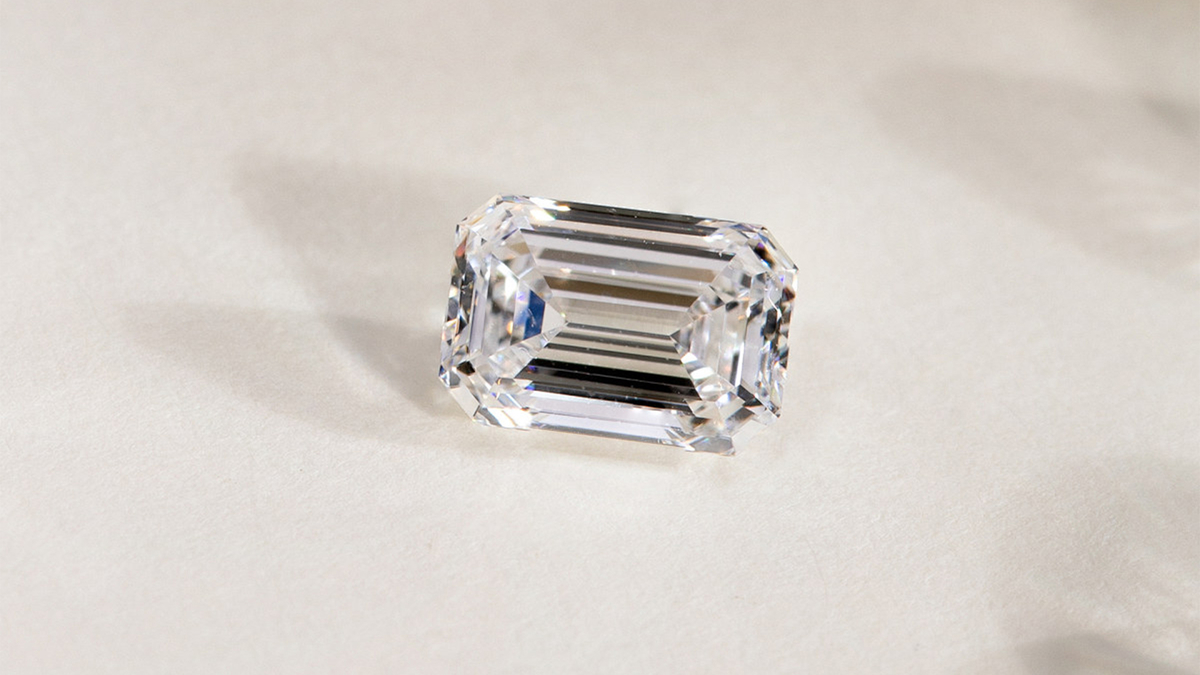
When we talk about a gemstone's cut, we are talking about much more than its outline.
The proportions and angles of individual facets determine how light enters the stone, travels through it, reflects internally, and eventually returns to the viewer.
For a round brilliant, important variables include:
· Pavilion angle
· Crown angle
· Table size
· Total depth
· Girdle thickness
· Facet symmetry
· Polish quality
These elements work together to influence brightness, fire, and scintillation.
Diamond has a refractive index of approximately 2.417 and is singly refractive. Traditional round-brilliant proportions have therefore been developed around the optical behavior of diamond.
Moissanite, however, has different optical properties. GIA reports refractive indices of approximately 2.648 and 2.691 for synthetic moissanite, together with a dispersion of about 0.104.
This means that although a moissanite may share the same visual outline as a round brilliant diamond, its interaction with light is fundamentally different.
The goal of a well-designed moissanite cut is therefore not to imitate every diamond proportion. It is to create a geometry that works with the material's own optical characteristics.
2. Three Optical Differences That Matter
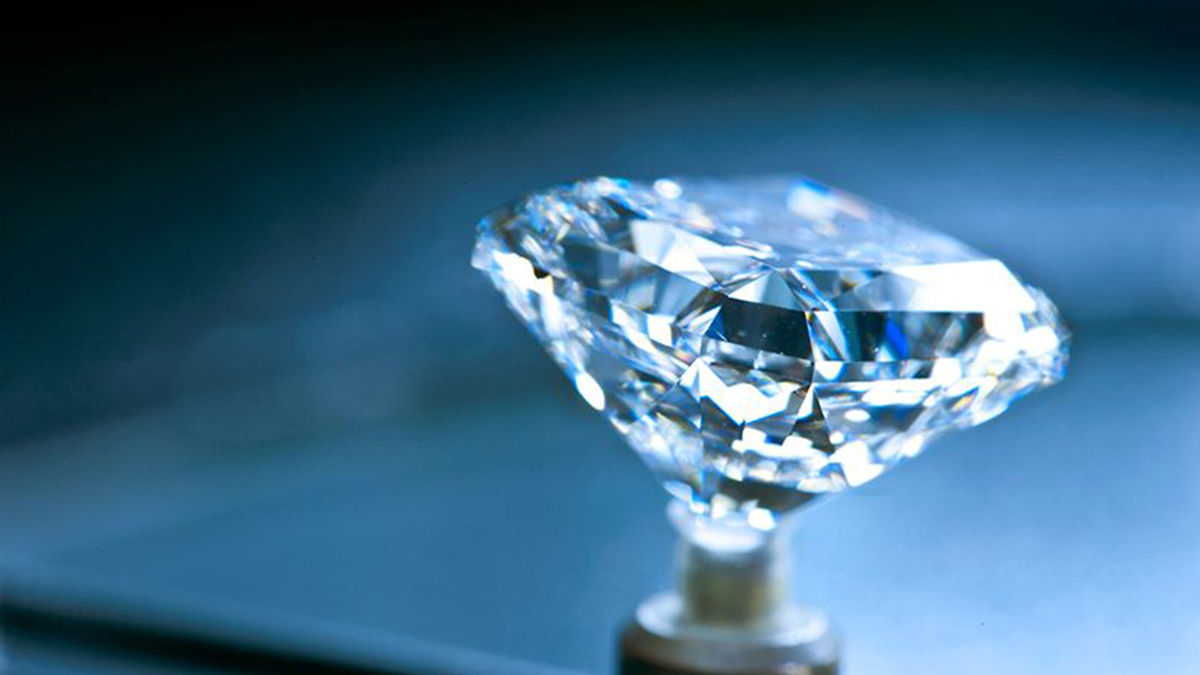
Higher Refractive Index
One of the most important differences is refractive index.
Moissanite has a higher refractive index than diamond. In general, a higher refractive index allows light to remain within a gemstone over a wider range of internal paths.
The critical angle—the minimum angle at which total internal reflection can occur when light travels from a higher-index material toward a lower-index environment—is directly related to refractive index.
This is one reason why simply taking a diamond pavilion geometry and transferring it to another gemstone is not necessarily the best way to optimize light return.
The interaction between pavilion geometry and refractive index has to be considered as a complete optical system rather than as an isolated angle.
3. Moissanite Is Doubly Refractive
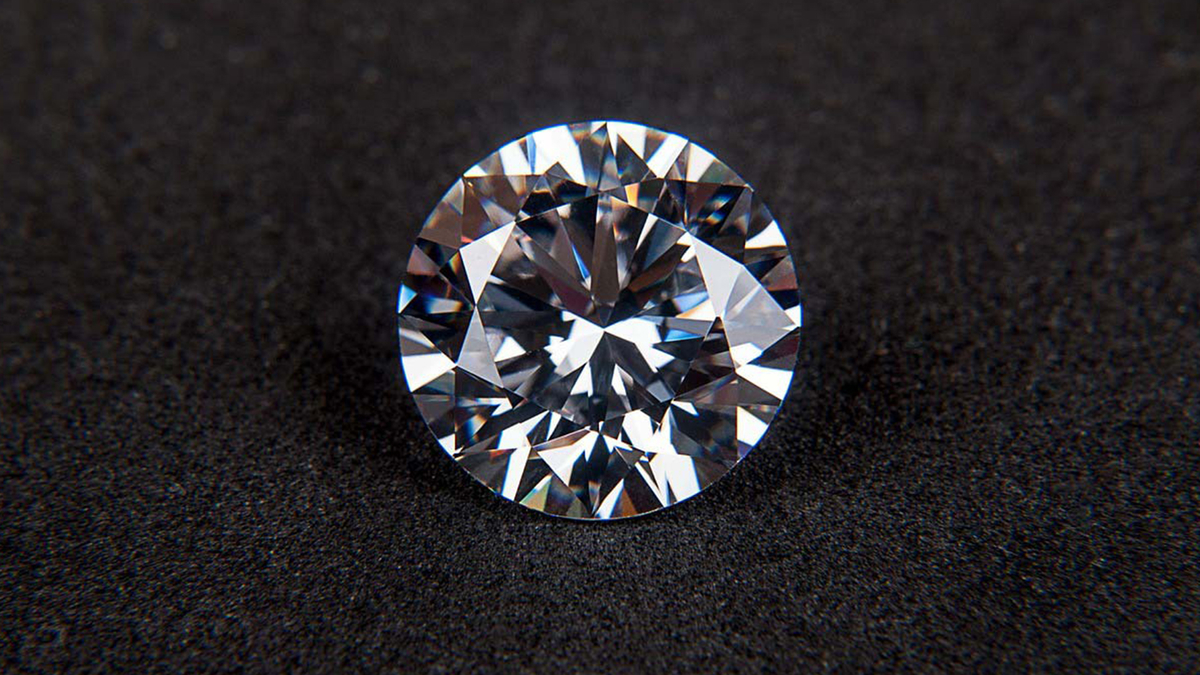
The second major difference is birefringence.
Diamond is singly refractive, meaning that light does not split into two separate rays as it travels through the crystal.
Moissanite is different. Synthetic moissanite is anisotropic and doubly refractive, with reported birefringence of approximately 0.043.
One visual consequence is that facet junctions and internal reflections can appear doubled when viewed through the stone at appropriate orientations.
This optical characteristic contributes to the distinctive appearance of moissanite and is also one reason why its facet geometry needs to be evaluated differently from diamond.
A cut that looks extremely crisp in diamond may produce a different visual balance in moissanite because the material interacts with light through two refractive paths.
This does not mean that double refraction automatically makes a moissanite poorly cut. Rather, it means that the cutter must understand the material and design the stone accordingly.
4. Moissanite Has Much Higher Dispersion
Perhaps the most recognizable optical characteristic of moissanite is its strong fire.
GIA reports a dispersion value of approximately 0.104 for synthetic moissanite, substantially higher than diamond. GIA also notes that moissanite can display more than twice the fire of diamond, particularly in larger stones.
This high dispersion is one of moissanite's defining visual advantages.
However, more fire is not necessarily the same as better fire.
If the cutting geometry does not create a balanced pattern of brightness, contrast, and spectral flashes, the stone can appear overly busy under certain lighting conditions.
For this reason, experienced moissanite manufacturers often focus on controlling and balancing fire, rather than simply maximizing it.
The objective is to create a stone with attractive brightness, defined scintillation, and colorful fire without allowing the optical effect to become visually excessive.
5. What Does an Optimized Moissanite Cut Look Like?
There is no single set of angles that should be treated as the universal "correct" moissanite cut.
Instead, a high-quality cutting design considers the relationship between the material's refractive properties and the complete facet architecture.
Depending on the design, manufacturers may optimize:
· Pavilion geometry
· Crown geometry
· Table proportion
· Total depth
· Facet arrangement
· Symmetry
· Girdle design
· Polish quality
The objective is to achieve an appropriate balance between brightness, fire, scintillation, contrast, and face-up appearance.
This is particularly important for larger moissanites, where the material's strong dispersion and birefringence can become more visually noticeable.
In other words, good moissanite cutting is not about making the stone behave exactly like diamond.
It is about making moissanite look its best as moissanite.
6. Does "Hearts and Arrows" Mean the Same Thing in Moissanite?
Not necessarily.
"Hearts and Arrows" refers to a visual pattern produced by a highly symmetrical facet arrangement, particularly in round brilliant-style stones.
Both diamonds and moissanites can be manufactured with hearts-and-arrows-style patterns. However, the presence of a similar pattern does not mean the two stones have identical optical behavior or identical cutting proportions.
The pattern is only one part of the evaluation.
A professional assessment should also consider symmetry, proportions, polish, light return, visual balance, and the specific optical properties of the material.
Therefore, a moissanite marketed as "diamond-style hearts and arrows" should not automatically be assumed to have been optimized according to diamond standards.
7. Why Cutting Quality Matters So Much in Moissanite Jewelry
Cut quality has a major influence on how a moissanite appears once it is set into a ring, pendant, pair of earrings, or other jewelry design.
Poorly balanced proportions may contribute to:
· Uneven brightness
· Excessive or uncontrolled fire
· Dark areas
· Reduced visual transparency
· Poor facet definition
· Unbalanced light and dark patterns
By contrast, a well-executed cut can help the stone display its characteristic combination of brilliance and strong fire in a more controlled and refined way.
This is particularly important for jewelry brands sourcing Moissanite Engagement Rings, Moissanite Earrings, Moissanite Tennis Bracelets, Moissanite Necklaces, and custom moissanite jewelry, because stone selection and cutting quality directly influence the appearance of the finished product.
Frequently Asked Questions
Q: Can moissanite use the same cut shape as diamond?
A: Yes. Moissanite can be produced in many of the same cutting styles used for diamond, including round brilliant, oval, pear, emerald, cushion, and other shapes.
However, the same shape does not mean the same optical optimization.
Q: Is a moissanite with diamond-style proportions automatically better?
A: Not necessarily.
A diamond-based proportion system was developed around diamond's optical properties. Moissanite has a different refractive index, dispersion, and birefringence, so the finished stone should be evaluated according to how well its geometry works with moissanite's characteristics.
Q: Does more fire mean better moissanite?
A: Not always. Moissanite naturally has very strong dispersion and can display significantly more fire than diamond. A refined stone should balance fire with brightness and scintillation rather than simply maximizing rainbow flashes.
Q: Why can some moissanites look slightly blurry?
A: One reason is moissanite's double refraction. Under suitable viewing conditions, the doubled appearance of facet junctions can become visible, particularly through the pavilion. GIA identifies this optical characteristic as an important distinction between moissanite and diamond.
The Key Takeaway
Moissanite does not need to become a "diamond copy" to look beautiful. Its higher refractive index, strong dispersion, and doubly refractive optical character give it a visual identity of its own.
For jewelry manufacturers, the real objective is therefore not to copy diamond cutting proportions blindly, but to develop a cutting design that takes advantage of moissanite's own optical behavior.
The best moissanite cut is not necessarily the one that most closely imitates diamond. It is the one that makes the most effective use of moissanite's unique optical properties.
For jewelry brands, wholesalers, and private-label businesses, this distinction is important when evaluating stone suppliers. A reliable manufacturing partner should be able to discuss not only the stone's size and color, but also its cutting design, optical performance, consistency, and suitability for the final jewelry application.